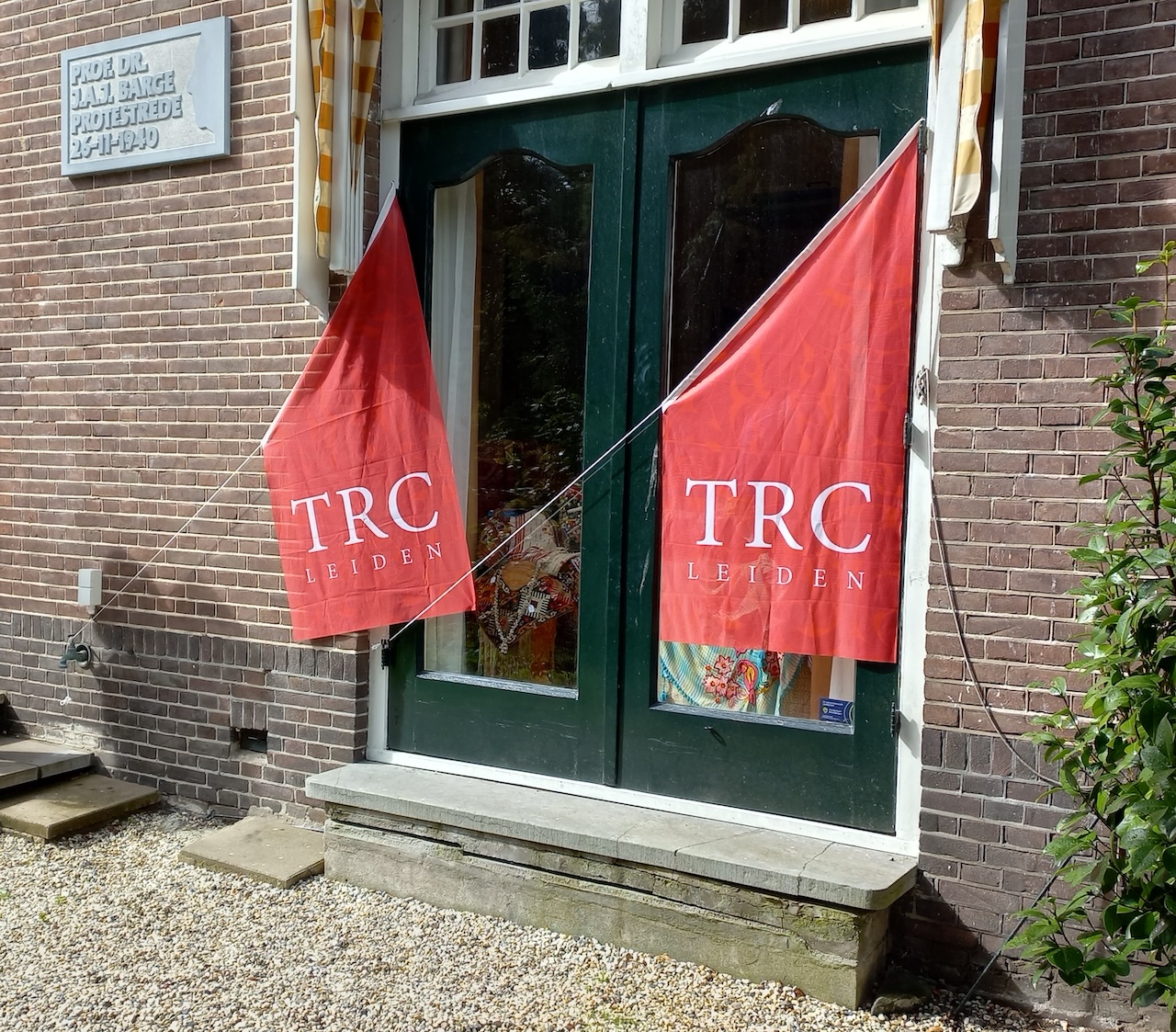
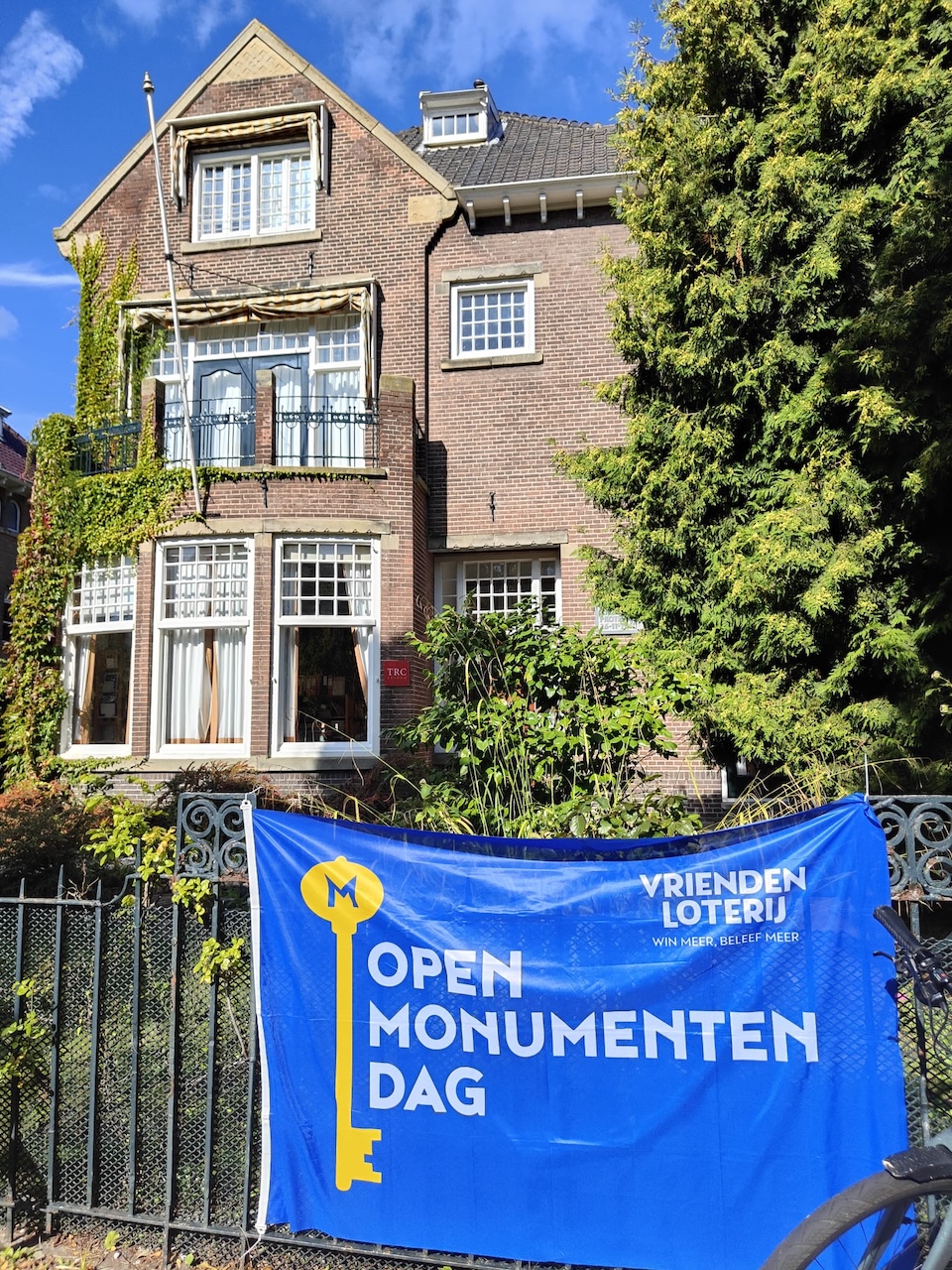
• F1
  • F4
  • F2
  • F3

Charly Sajjad Baumann and Dr. Gillian Vogelsang-Eastwood, 15 May 2026Charly Sajjad Baumann and Dr. Gillian Vogelsang-Eastwood, 15 May 2026This year I am completing my Bachelor’s degree in Fashion Design at the University of Applied Sciences HTW Berlin. For my bachelor’s thesis, I am focusing on Afghan embroidery, with a special emphasis on traditional Hazara embroidery. As this topic is personally very important to me, I wanted to approach my work not only creatively but also in a well-founded academic way. Therefore, I began searching online for information, sources, and research institutions that deal with traditional textiles.

During my research, I discovered the Textile Research Centre (TRC), Leiden, in the Netherlands. This centre is dedicated to the study of traditional textiles, crafts, and embroidery from various cultures around the world. I found it particularly fascinating that it also holds information and textile collections from Afghanistan.

After a short time, I knew that I absolutely wanted to visit this place to learn more about Afghan embroidery and its cultural significance. So I traveled from Berlin to Leiden. The journey was very exciting for me because I knew it would be highly important for my bachelor’s thesis.

Another interesting, busy and intriguing day at the TRC! We have just had the opening of the TRC’s first exhibition in our new building on the Boerhaavelaan, here in Leiden. The exhibition is about khayamiya, a form of appliqué from Egypt.

From left to right: Prof. B. ter Haar - Romeny, Chairman TRC; Mrs Nanda Jagusiak, guest; Mrs Mariham Youssef, Deputy Head of Mission, Egyptian Embassy; H.E. Mr. Emad Magdy Hanna Kamel, Egyptian Ambassador to the Netherlands; Dr Gillian Vogelsang-Eastwood, Director TRC; Ms. Christina de Korte, co-curator exhibition. Photograph: Mrs Flora Kovacs Wester, TRC Fellow.From left to right: Prof. B. ter Haar - Romeny, Chairman TRC; Mrs Nanda Jagusiak, guest; Mrs Mariham Youssef, Deputy Head of Mission, Egyptian Embassy; H.E. Mr. Emad Magdy Hanna Kamel, Egyptian Ambassador to the Netherlands; Dr Gillian Vogelsang-Eastwood, Director TRC; Ms. Christina de Korte, co-curator exhibition. Photograph: Mrs Flora Kovacs Wester, TRC Fellow.

Some months ago, we discussed what the first exhibition should be about. It was important that it would represent the activities and collection of the TRC, and add something new to the subject, as well as being colourful! We wanted to start the new exhibition cycle with a warm glow that would leave people feeling intrigued and inspired. It also had to be something that would tell us about how to use our new building and exhibition spaces, not so easy as it sounds as we cannot fix anything to the walls because of the nature of the wall coverings (see a previous blog about a technique that in Dutch is called betengeling).

What could be better than an exhibition about khayamiya from Egypt, especially as one of our interns, Christina de Korte, had just spent several months learning how to make this form of appliqué in the historic Street of the Tentmakers in Cairo? So Augusta de Gunzbourg, our curator and exhibition maker, and Christina joined forces to curate the exhibition.

Fig. 1. Copper and enamel Amsterdam School-style panel, by Marie Kuyken. Photograph: S. Anderson.Fig. 1. Copper and enamel Amsterdam School-style panel, by Marie Kuyken. Photograph: S. Anderson.A recent visit to the Museum Het Schip in Amsterdam sent me scurrying to the TRC ‘s on-line catalogue. Het Schip, in the Amsterdam-West neighbourhood, is a historic, architectural gem in glowing red brickwork. Designed in 1919 by Michel de Klerk, this social housing complex included 102 flats, a post office and a school—made expressly for impoverished, working-class families. It pioneered a new expressionist style of architecture called the Amsterdamse School.

The Amsterdam School’s attention to detail encompassed not just buildings, but also the furniture and lighting inside the buildings—including textile components, from the curtains and rugs, to wall paper and upholstery. Some of the textile designers of this style are the subject of Het Schip’s latest exhibition: “Unseen Talent: Women of the Amsterdam School.”

The Dutch designer Marie Kuyken (1898-1988) was one of the Amsterdam School pioneers. Her father set up an engraving and art studio in Haarlem, where he developed his own style of cloisonné, based on much older Byzantine enamelling techniques.

Marie started working as a designer in his studio as soon as she graduated. Her expressionist style won high praise from critics. One critic wrote in 1918 that in her enamel and copper decorative panels “glows the precious inlay in a beautiful, enchanting splendour of colours” (Fig. 1).

Orenburg is a province in the southeastern part of Russia, along the slopes of the Ural mountains, and close to the borders with Kazakhstan. This is where Europe meets Asia. In this region, at least since the 17th century, there is a strong tradition of lace shawl knitting. This would make the tradition older than Shetland knitting.

Detail of a 'Warm' Orenburg knitted lace shawl. Russia, 20th century (TRC 2025.0751).Detail of a 'Warm' Orenburg knitted lace shawl. Russia, 20th century (TRC 2025.0751).The shawls are knitted using goat's under hair, or down, from locally bred animals. The yarns are traditionally hand spun, two-ply at a slightly higher twist to create crisp patterns. The fibres of these goats are extremely thin, only 17 microns. This is four times thinner than human hair, and 1.5 times finer compared to angora goats.

Fig. 1. Finishing the move: Group photograph with the lads (and Gillian), 10 April. Photograph by Emilie Lambert.Fig. 1. Finishing the move: Group photograph with the lads (and Gillian), 10 April. Photograph by Emilie Lambert.Another busy week at the TRC! The painters, electricians, curtain and security people have finished their work. The builders are doing the last few jobs and making plans for what needs to be done later in the year, especially on the outside.

The last deliveries for now by the removal company have just taken place (Fig. 1) and then, hopefully, there will be a period of a little peace and quiet, so we have time to get used to the building and see and discuss what needs to be done.

We are talking with Stichting Monumentenbezit (the new owners of B6) and others, for example, about having an annex in the garden for the permanent storage of the TRC Collection. Leiden Council and Monumentenbezit have already given their permission for the annex to be built, and now we have to find the funding. As you can imagine, there is much to think about and do on this subject matter.

We have also been discussing what should be done with the 150-200 year old Amsterdam waffle-house (or was it for pancakes?), which since the 1920s has been a feature of what is now the TRC garden, but originates from a bridge in Amsterdam (close to the current Koningsplein). It is a lovely wooden building, but in a poor condition. The romantic in me can see summer events, including lectures, buffet dinners, workshops on fibre plants and natural dyeing, etc. In addition, I know someone close to me who wants to write his memoirs there. But again this is a subject for later thoughts and discussions!

Although we will not officially reopen the TRC to the public until Monday, the 4h May, we are already welcoming individuals and groups visitors at our new premises at Boerhaavelaan 6, as well as starting a busy programme of workshops, study days and lectures. And of course there was the recent book presentation with the Mayor of Leiden. 

Taiwanese delegation visiting the TRC, with Gillian Vogelsang in their midst. They are standing in the garden of Boerhaavelaan 6. In the background is the garden pavilion. Taiwanese delegation visiting the TRC, with Gillian Vogelsang in their midst. They are standing in the garden of Boerhaavelaan 6. In the background is the garden pavilion.

It has been quite a week, as we were preparing the TRC’s new home on the Boerhaavelaan for a ‘soft opening’ last Thursday (26th March 2026). It took the form of a book presentation with a guest-of-honour, namely Peter Heijkoop, the Mayor of Leiden. The book in question is the Atlas van de Borduurkunst. Een wereldreis langs erfgoed en stijlen (WBooks, 2026), which is the Dutch version of the Atlas of World Embroidery. A global exploration of heritage and styles (Princeton University Press, 2026). The author is Dr Gillian Vogelsang-Eastwood, Director of the TRC.

The Mayor, Peter Heijkoop, receives a copy of the Atlas from the author. Copyright Joost Kolkman.The Mayor, Peter Heijkoop, receives a copy of the Atlas from the author. Copyright Joost Kolkman. 


Fig. 1. Hand embroidery by Maqadeer, a young student at YENOF’s schooling programme. Her work is based on a head covering illustrated in Fig.4.Fig. 1. Hand embroidery by Maqadeer, a young student at YENOF’s schooling programme. Her work is based on a head covering illustrated in Fig.4.

Over the past few months, a project dedicated to preserving Yemen’s embroidery heritage has been underway. The initiative, a collaboration between YENOF (Yemen Noor Foundation), IL- CI (Improving Lives through Cultural Initiatives) and the ALIPH Foundation, has brought together twenty-five women, each studying twenty-five traditional dresses from different regions of the country.

Zoek in TRC website

Contact

Boerhaavelaan 6
2334 EN Leiden.
Tel. +31 (0)6 28830428  
office@trcleiden.org

Het TRC is elke dag geopend tussen 10.00 en 15.00 uur.

facebook 2015 logo detail


instagram vernieuwt uiterlijk en logo


Bankrekening

NL39 INGB 0002 9823 59, t.a.v. Stichting Textile Research Centre.

Financiële giften

Het TRC is afhankelijk van project-financiering en privé-donaties. Al ons werk wordt verricht door vrijwilligers. Ter ondersteuning van de vele activiteiten van het TRC vragen wij U daarom om financiële steun:

Giften kunt U overmaken op bankrekeningnummer (IBAN) NL39 INGB 000 298 2359, t.n.v. Stichting Textile Research Centre. BIC code is: INGBNL2A

U kunt ook, heel simpel, indien u een iDEAL app heeft, de iDEAL-knop hieronder gebruiken en door een bepaald bedrag in te vullen: 


Omdat het TRC officieel is erkend als een Algemeen Nut Beogende Instelling (ANBI), en daarbij ook nog als een Culturele Instelling, zijn particuliere giften voor 125% aftrekbaar van de belasting, en voor bedrijven zelfs voor 150%. Voor meer informatie, klik hier