On Friday, 27 March, Susan Cave, who is a TRC-volunteer and co-curator of the current American Quilts exhibition at the TRC, wrote the following about the recent demise of the American company of Sears Roebuck:
This year (February 2020), Sears Roebuck closed the last of its stores. A household name for well over 120 years, America has lamented its passing. The Mail Order Catalogue had already ceased in 1993 after the company began losing hundreds of millions of dollars in the heady days of re-structuring business and industry. The glossy thousand-odd pages of the most famous catalogue the world has ever known stopped being printed.
Just about every American who lived in the 20th century grew up with Sears Roebuck as a household name. It was a department store in paperback, a book of dreams that sold everything, from a plough to quilting thread. Stuck out on a farm in the middle of nowhere did not matter. Sears would not only deliver, but they would also guarantee the quality.
Quilters have a lot to thank Sears for, apart from providing billions of yards of fabric, batting and thread. They might well have been the one company on earth that gave quilts the hike up into the art world. Eighty-three years ago, in the January edition of the 1933 catalogue, a small 2-inch by 3-inch notice announced a quilt contest to celebrate Chicago’s ‘Century of Progress Fair'. In Depression America the fabulous sum of US$7000 was offered in total prize money. The hefty first prize was $1000. A lot of dollars, even on today’s standard. Adjusted for inflation, the sum is $19616.35. Just imagine a quilter winning that!
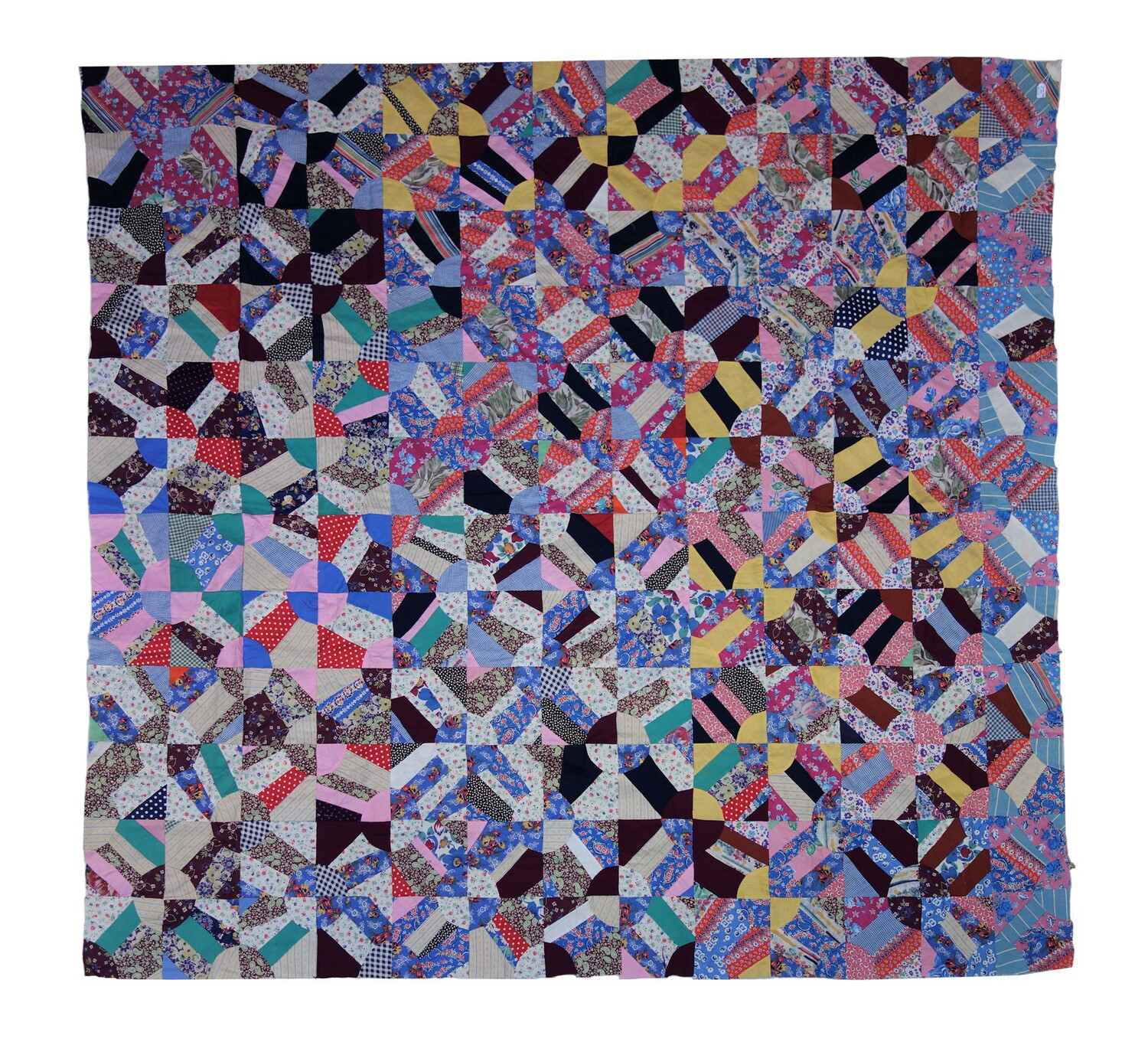 Quilt worked on pieces from the 1941 Sears Roebuck catalogue (TRC 2018.3129).
There were 24878 entries and a total of five million people visited the Fair. An enterprising newspaper reporter worked out that the exhibits represented 642 years of quilting for eight hours a day. Many of our quilts at the TRC have been inspired by that small notice in the Sears Catalogue. In fact, we have a 1930’s quilt that was made with fabric pieces sewn on to their pages (TRC 2018.3129)! What a powerful effect it had on a population that was living through such troubled times. The organisers must have been well pleased, if not horrified, at the sheer volume of the mail.
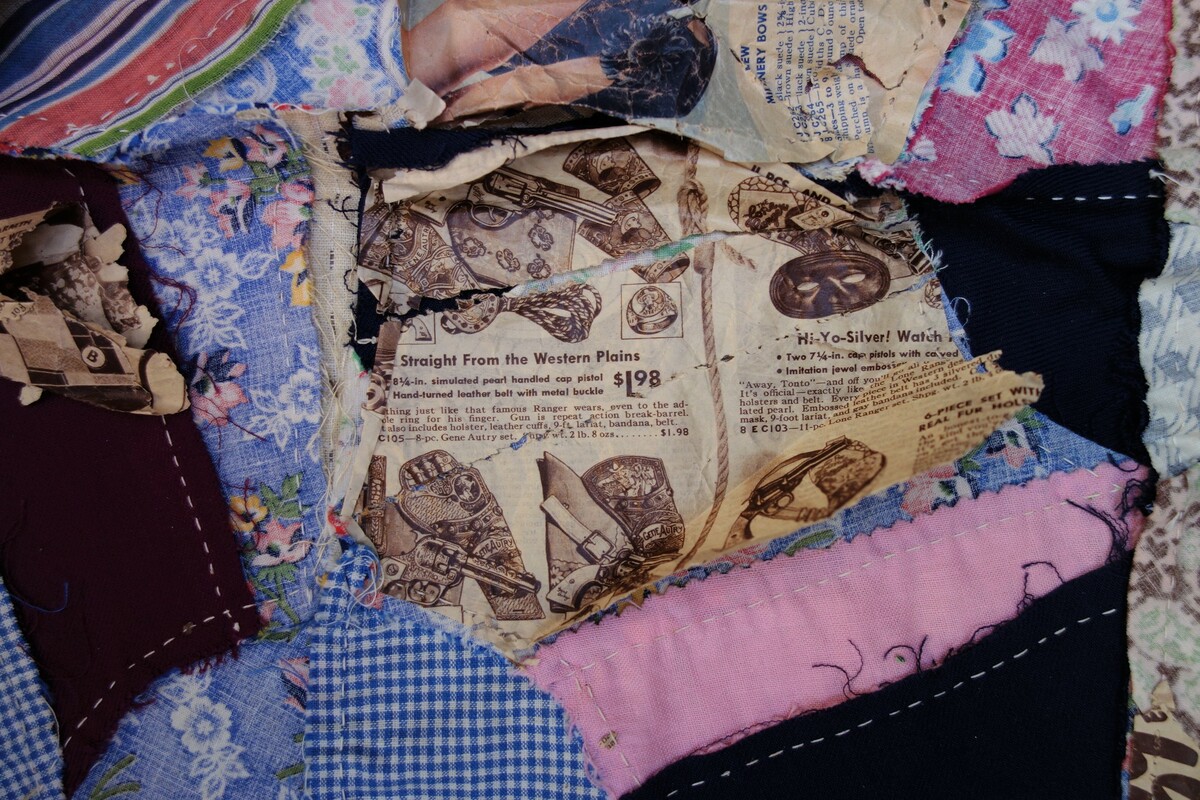 Detail of the pieced quilt, showing pages from the Sear Roebuck catalogue (TRC 2018.3129).
I am truly saddened that Sears went on the skids, especially as it was taken so much for granted through the years. But adapting to new technology and fighting the emerging giants of the internet were all too much. In the Quilting Hall of Fame, Sears Roebuck Inc., deserve, in my opinion, pride of place. If only we could find some modern day wonder to provide us with that that same kind of inspiration – and prize money – for these dark days ahead.


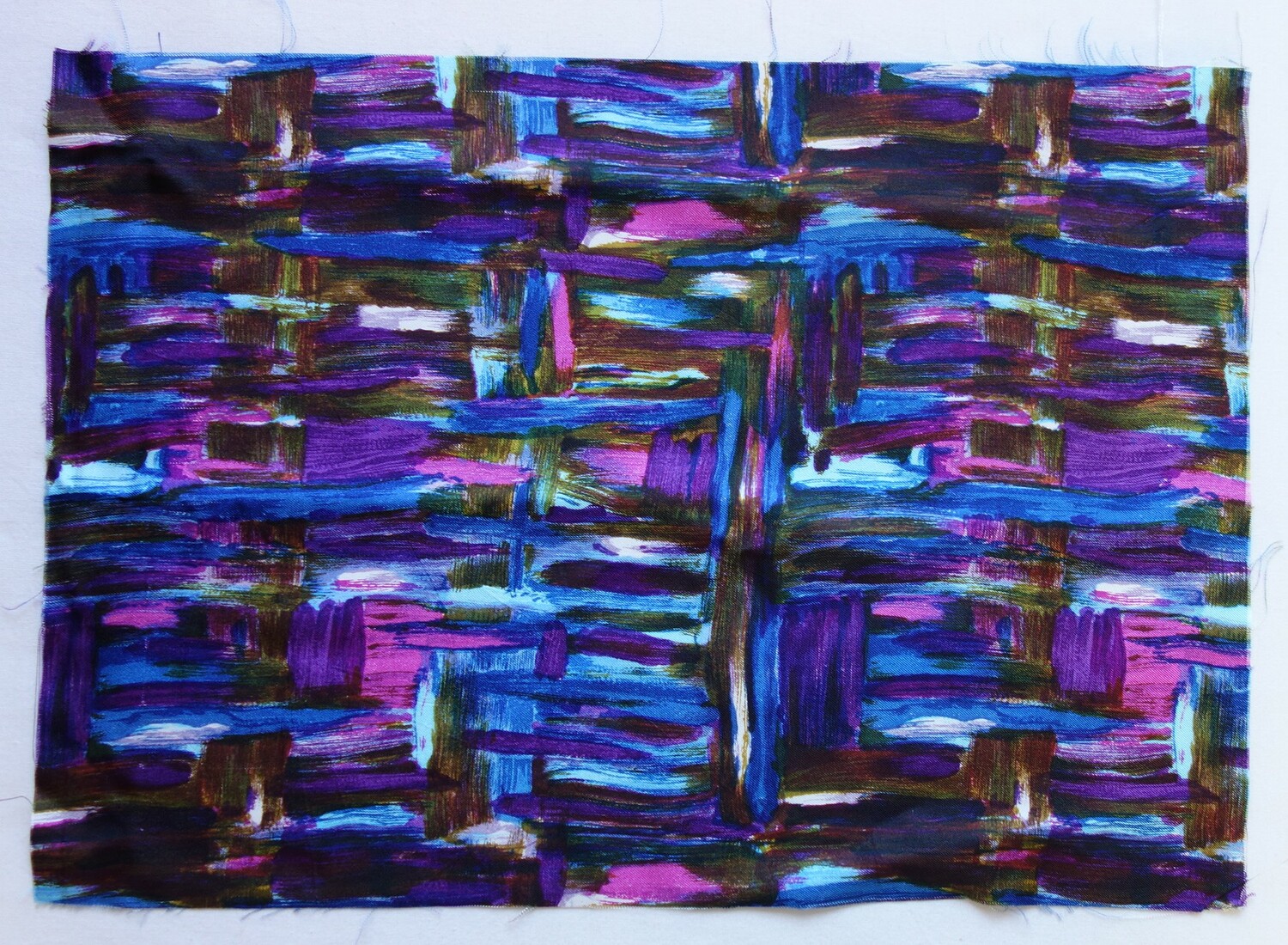 Cloth sample from the 1950's, initially collected by Yves Cuvelier (TRC 2020.1190).