• F1
  • F3
  • F2
  • F4

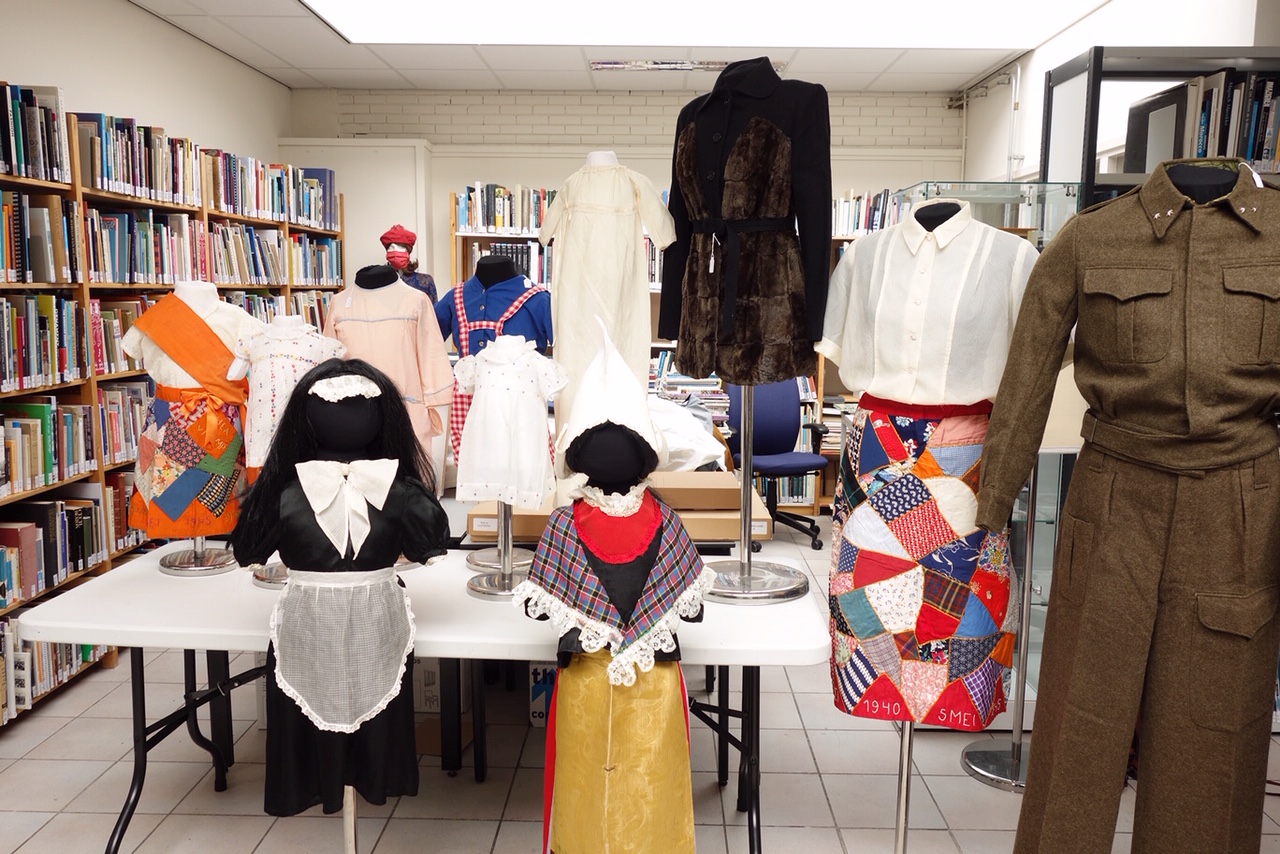
We are very busy working on the TRC’s next exhibition that is about the (domestic) history of the Second World War and The Netherlands told through the medium of textiles, dress and accessories. In addition, there will be a section on Mennonite relief quilts that were made in the USA and Canada and sent from 1945 onwards to war-torn Europe. The exhibition opens on the 16th September 2020.

Photograph of a woman displaying the Red Cross scarf designed by Prince Bernhard  (Rijksmuseum, Amsterdam, NG-1988-9-20).Photograph of a woman displaying the Red Cross scarf designed by Prince Bernhard (Rijksmuseum, Amsterdam, NG-1988-9-20). 

We have many items for the exhibition, but I have just read about a piece that would have a special place in the exhibition, but we do not have an example in the TRC Leiden collection!

The piece in question is a scarf whose design includes the emblems of the Dutch Navy, the Merchant Navy, Airforce and Army, as well as the texts: Je Maintiendrai and Nederland zal herrijzen. The scarf was designed by Prince Bernhard, the husband of the then Princess Juliana of The Netherlands (she became queen in 1948). The scarf was produced in 1945 as a means of raising funds for the Red Cross and for the Prins Bernhard Fonds.

So far we only have a photograph of the scarf, but if you have one you would be willing to donate to the TRC so that we can use it in our exhibition, please let me know as soon as possible! Our email address is Dit e-mailadres wordt beveiligd tegen spambots. JavaScript dient ingeschakeld te zijn om het te bekijken..

Gillian Vogelsang, Sunday, 28 June 2020.

Photograph of Annemro Sundbø, winner of the Sørlandets litteraturpris for 2020.Photograph of Annemro Sundbø, winner of the Sørlandets litteraturpris for 2020.It is lovely to have some good news in these strange times. We have recently heard that Annemor Sundbø, a frequent and popular visitor and lecturer at the TRC, has just won a major Norwegian literary prize for her book Koftearven: Historiske trader og magiske mønster (‘Cardigans: Historical trades and magical patterns’). More specifically: the prize is the Sørlandets litteraturpris for 2020. A video of the event can be seen here.

It is a beautifully illustrated book, which looks at many cardigans that come from various parts of Norway. We reviewed the book in the NewTextileBooks review series of the TRC. There are discussions about technical, historical and design aspects. The design section is the ‘magical’ element.

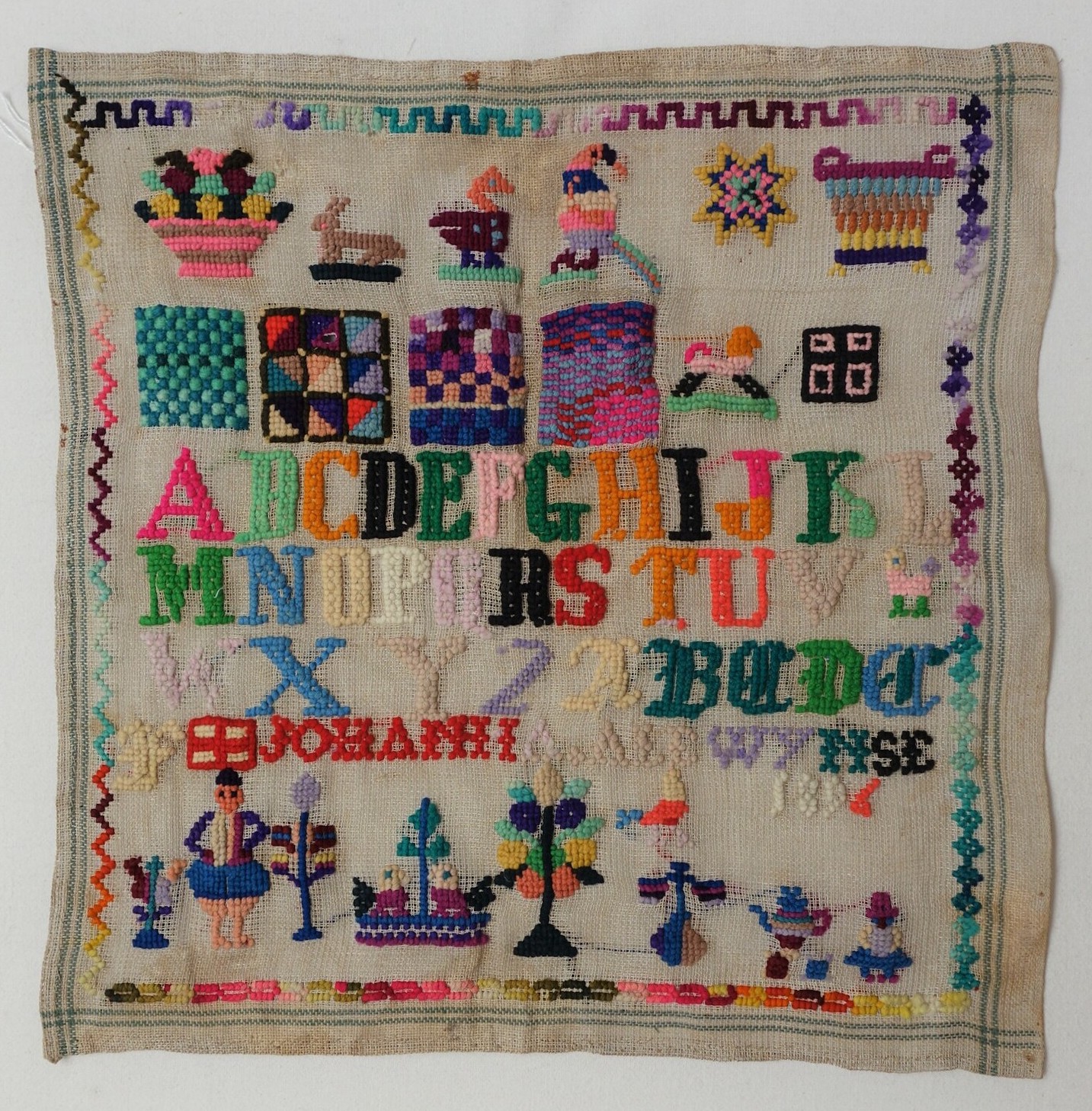
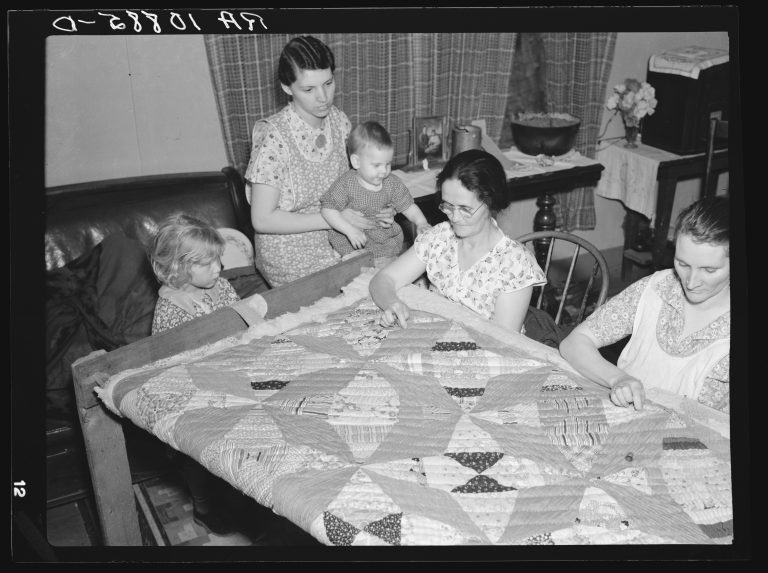
This year, the TRC in Leiden is exhibiting a large number of American quilts. The TRC does so through the current American Quilts exhibition, and from September as part of an exhibition about textiles, dress and World War II. This display will include a number of relief-quilts made by the Mennonite community in the USA and Canada during the war to be sent to Europe to provide warmth and protection to the refugees in war-torn Europe. 

The Bible Quilt, completed by Harriet Powers in 1886.The Bible Quilt, completed by Harriet Powers in 1886.

Dress with long train from the island of Socotra (TRC 2017.0242). The dress is more than two metres long; the front reaches to the knees. The back of the dress includes the long train. Dress with long train from the island of Socotra (TRC 2017.0242). The dress is more than two metres long; the front reaches to the knees. The back of the dress includes the long train. Socotra is a small island in the Gulf of Aden, between the Red Sea, the Arabian Sea and the Indian Ocean. You may never have heard about it, but this weekend it reached the world’s headlines because of an attempt by some of the local people to make themselves independent of nearby Yemen. Mainland Yemen has been devastated by a civil war that still continues, so the attempt to cut links with Yemen are understandable.

I won’t go into the political details, but what struck me was the information that journalists must desparately have been collecting about this place, in order to provide some couleur locale. They could have written something about its human history, which goes back for thousands of years. The island features already in a two thousand year old sea manual for the trade between Roman Egypt and India. But what the media came up with was that the island was famous for a particular tree, the Dragon’s Blood tree, and for the Socotra cormorant, which is a type of sea-bird.

Now trees and birds are enormously important, but my well-informed spouse also knew about the island, not because of its ancient history or a type of sea-bird, but because of a particular type of dress worn by the local women. It has a very long train that is, so we assume, wrapped around the body, forming some sort of second covering. In all, the dress is more than two metres long, and decorated with embroidery and/or silver-coloured bands on the front and back.

The Textile Research Centre in Leiden has two examples of this unique form of garment, both dating to the late twentieth or early twenty-first centuries (TRC 2015.0551 and TRC 2017.0242).

The cover page of the latest issue of The Journal of Dress History shows a detail of an early nineteenth century lace veil, which is now housed in the collection of the TRC in Leiden (TRC 2014.0381). The veil once belonged to Queen Anna Paulowna (1795-1865), a daughter of the Russian czar Paul I. She was the wife of the Dutch king, Willem II. The photograph was taken by Joost Kolkman, one of the TRC webmasters and a professional photographer.

Summer 2020 CoverSummer 2020 Cover

T-shirt referring to the legendary eye-sight test of the British official, Dominic Cummings, to Barnard Castle (TRC 2020.3015).T-shirt referring to the legendary eye-sight test of the British official, Dominic Cummings, to Barnard Castle (TRC 2020.3015).The TRC has now been officially open for two weeks and things are (slowly) beginning to get back to normal. Visitors are coming in – usually by appointment, but very occasionally simply drawn in by the wonderful and colourful quilts that are on display in the Gallery.

Throughout our premises there are bottles of soaps and hand cleaners. There are face masks available should people wish to use them. These are important because guided tours, courses and workshops have started again. We have to get used to the smaller numbers of participants, but it makes it more personal and more time can be spent on the many questions and comments. Because of these limited numbers we are repeating various workshops on different days and many events are already full. So if you are interested in attending something (see the programme), please email and register as soon as possible (Dit e-mailadres wordt beveiligd tegen spambots. JavaScript dient ingeschakeld te zijn om het te bekijken.).

If allowing a woman to cover her face in public is a matter for discussion and, at times, heated debate, then the COVID-19 pandemic has brought the discussion of face coverings to an entirely new level. Depending on your perspective, the COVID face mask is political, fashionable, essential -- and is being produced in quantities like never before.

A group of people standing outdoors wearing masks over their mouths. This was probably during the Spanish Flu epidemic of 1918. One of the women has a sign in front of her reading 'Wear a mask or go to jail." Courtesy Digital Public Library America.A group of people standing outdoors wearing masks over their mouths. This was probably during the Spanish Flu epidemic of 1918. One of the women has a sign in front of her reading 'Wear a mask or go to jail." Courtesy Digital Public Library America.

During the 1918 Spanish Flu pandemic, individuals, corporations, and governments faced similar challenges to those confronted today. American cities that passed masking ordinances in the autumn of 1918 struggled to enforce them among the small portion of people who rebelled. Some even poked holes in their masks in order to smoke. Common punishments were fines, prison sentences, and having your name printed in the newspaper.

Queen Victoria's wedding dress, RCIN 71975.Queen Victoria's wedding dress, RCIN 71975.A recent TRC blog on a wedding dress (3 May 2020) made me look closer at the fascinating history of wedding clothes. Wedding dresses are seen as very traditional garments, but they can also reflect surprisingly contemporary history and social issues.

Two of the wedding dresses in the TRC collection, one Dutch (TRC 2019.2154), the other American (TRC 2020.2126), reflect both the scarcity of materials and the make-do attitudes of the Second World War.

A burgundy coloured bow tie (TRC 2019.1614) in the TRC’s LGBTQ+ collection, which I wore at my own wedding, reflects a groundbreaking December 2000 law that made the Netherlands the first country in the world to legalise same-sex marriages.

Zoek in TRC website

Contact

Boerhaavelaan 6
2334 EN Leiden.
Tel. +31 (0)71 5134144 (kantooruren)  
office@trcleiden.org

Het TRC is elke dag geopend tussen 10.00 en 15.00 uur.

facebook 2015 logo detail


instagram vernieuwt uiterlijk en logo


Bankrekening

NL39 INGB 0002 9823 59, t.a.v. Stichting Textile Research Centre.

Financiële giften

Het TRC is afhankelijk van project-financiering en privé-donaties. Al ons werk wordt verricht door vrijwilligers. Ter ondersteuning van de vele activiteiten van het TRC vragen wij U daarom om financiële steun:

Giften kunt U overmaken op bankrekeningnummer (IBAN) NL39 INGB 000 298 2359, t.n.v. Stichting Textile Research Centre. BIC code is: INGBNL2A

U kunt ook, heel simpel, indien u een iDEAL app heeft, de iDEAL-knop hieronder gebruiken en door een bepaald bedrag in te vullen: 


Omdat het TRC officieel is erkend als een Algemeen Nut Beogende Instelling (ANBI), en daarbij ook nog als een Culturele Instelling, zijn particuliere giften voor 125% aftrekbaar van de belasting, en voor bedrijven zelfs voor 150%. Voor meer informatie, klik hier