 From Buteh to Paisley: The story of a global icon. TRC exhibition in the makingYesterday, Tuesday 2nd, we all heard the announcement by the Dutch government that the corona virus lockdown in the Netherlands will continue until the 2nd March (big sigh). So we have decided that (all being well) the TRC's next exhibition will open on the 3rd March! And we are working hard to get everything in order.
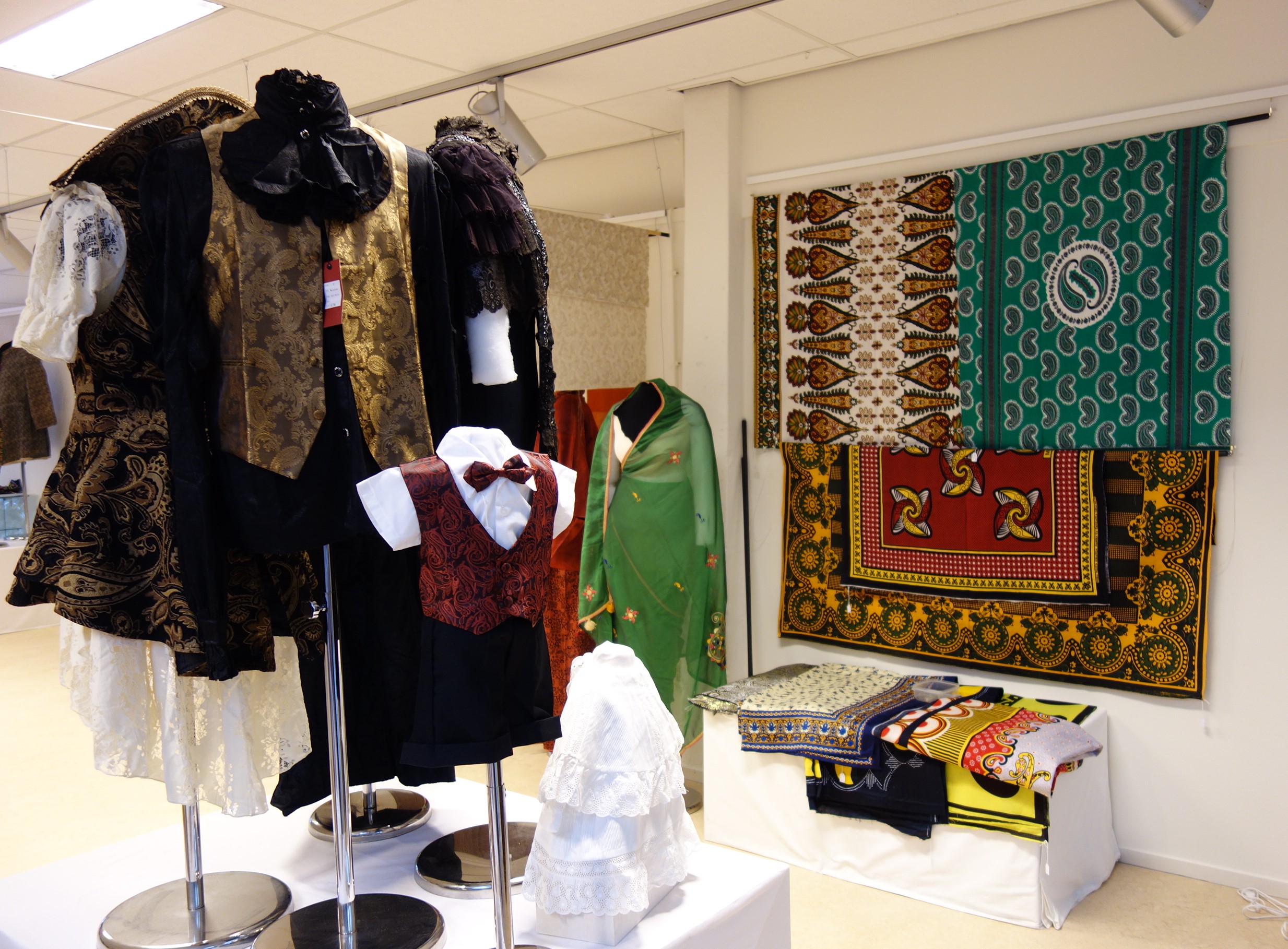
The exhibition is about the history of the paisley motif and called From Buteh to Paisley: The story of a global icon. It is not the story of the Paisley Shawl, but something much, much bigger. The paisley motif is actually one of the few non-geometric design forms that can be found throughout the world. It is worn by men, women, children of all ages, literally from the cradle to the grave.
 From Buteh to Paisley: The story of a global icon. TRC exhibition in the makingMoreover, it is worn by people of many different ethnic and cultural backgrounds. It is also one of the very few motifs that are used to decorate garments ranging from underwear (male and female), through stockings, ties and blouses, to skirts, trousers, bikinis and beach hats. It can also be found on the attire worn by a Hell’s Angel biker, a Los Angeles gang member, a Steampunk Goth, to a respectable London banker and a granny who is knitting socks for the grandchildren, all without any comments being made.
The exhibition will include a wide range of textiles and garments from Iran, India, Japan, Indonesia, Africa as well as Europe, literally from Estonia to Italy, via Britain and Russia. There are also many printed textiles on display that reflect how the paisley has developed in the West during the 20th century.
 From Buteh to Pisley: The story of a global icon. TRC exhibition in the makingThere will also be a digital version of the exhibition that will come online at the same time as the actual one. So, for whatever reason, if you cannot actually come and see this colourful and fun exhibition, you can at least get a glimpse and a feel of this amazing story. Be aware, however, once you become atuned to paisley you will see it everywhere. It is taking over the world.....
Gillian Vogelsang, director TRC, 3 February 2021