• F1
  • F2
  • F3
  • F4

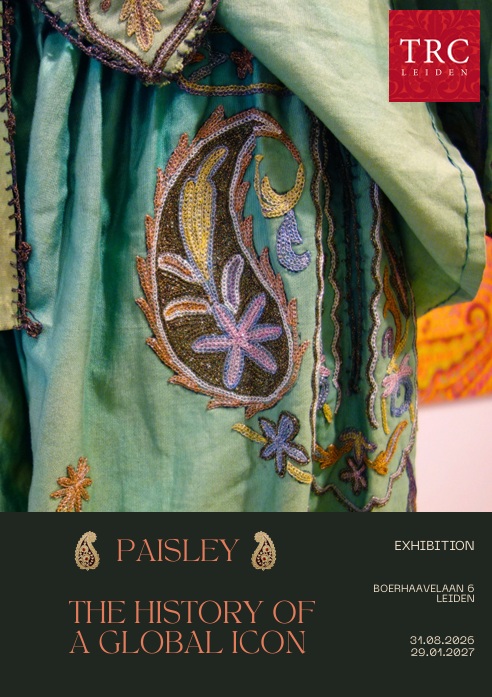
On 31 August, the TRC opened its doors for a new exhibition: Paisley: The History of a Global Icon (by the curator, Augusta de Gunzbourg)

The new Paisley exhibition at the TRC. Photograph by the curator, Augusta de Gunzbourg.The new Paisley exhibition at the TRC. Photograph by the curator, Augusta de Gunzbourg.We all know the motif, that cone shape that is curved at the top, which is found on Kashmir shawls, men’s ties, 1970’s hippie prints, or even on cowboy bandanas. Paisley is everywhere !

It is so well-known that it is generally accepted as just being one of those patterns that have always been there, but we rarely think think about its origins and why it is so popular all over the world.

The TRC exhibition is a re-edited, expanded version of one of its past, and online exhibitions (interrupted by the COVID-pandemic) about the famous Paisley motif, and this time mounted in the TRC's new premises along the Boerhaavelaan (No.6) in Leiden.

The exhibition explores the history of the Paisley motif, its ancient origins and its development to the present day. It also looks at how it is currently used for a wide variety of textiles and garments all over the globe.

The Paisley (butter) motif on a Kashmir shawl, presented in the TRC Paisley exhibition.The Paisley (butter) motif on a Kashmir shawl, presented in the TRC Paisley exhibition.The motif first appeared in Iran under the name of buteh. It was further developed for use on the famous Kashmiri shawls. It was exported to Europe, through the (British) East India Company, from the 17th century onwards. In Europe it was copied and used in local industry, and hence again distributed across Europe.

The motif, although quintessentially Eastern in origin where its name often is a variation on buteh, owes its Western name to the Scottish town of Paisley, a major weaving site during the Industrial Revolution.

Nowadays and with few exceptions, Paisley is seen as a traditional “local" motif in most countries around the world, even though it is in fact used globally.

The exhibition can be seen at the TRC during opening hours, every week-day between ten in the morning and three in the afternoon, and on special occasions further to be announced. Access is free.

Paisley exhibition at the TRC. Photograph by the author.Paisley exhibition at the TRC. Photograph by the author. Paisley exhibition at the TRC. Photograph by the author.Paisley exhibition at the TRC. Photograph by the author.
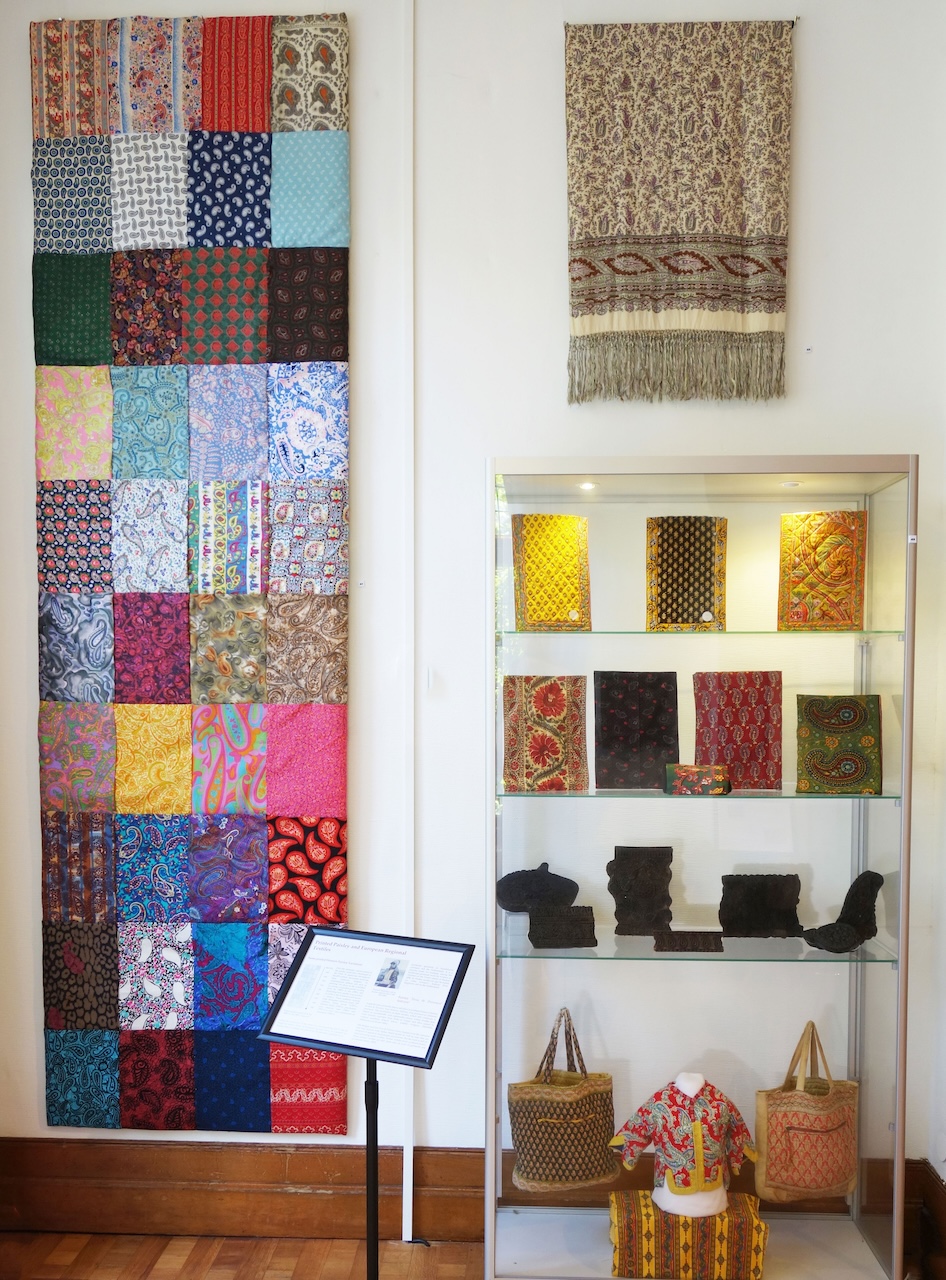
Paisley exhibition at the TRC. Photograph by the author.Paisley exhibition at the TRC. Photograph by the author.
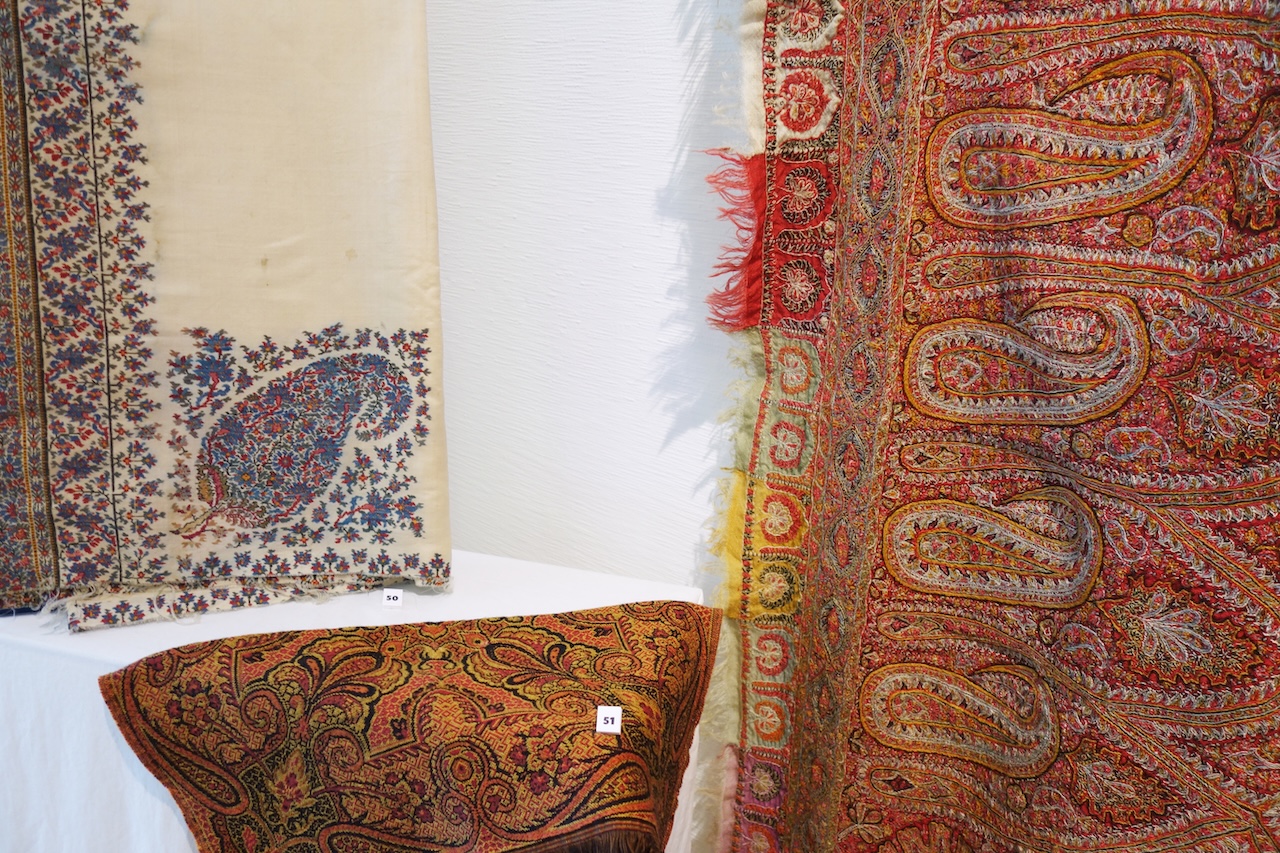
Textiles with Paisley (buteh) motifs, presented in the TRC exhibition.Textiles with Paisley (buteh) motifs, presented in the TRC exhibition.
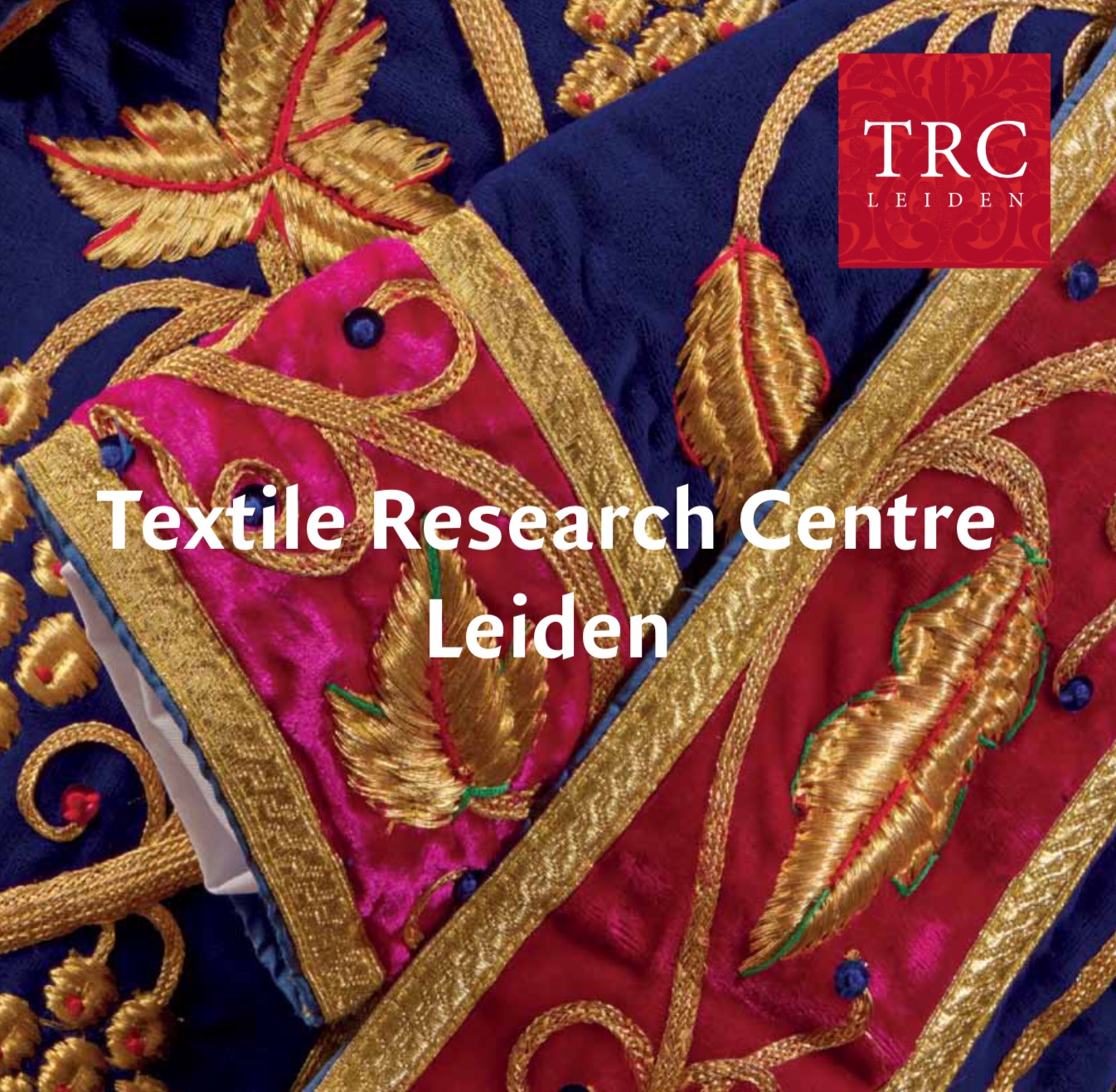
Click on the illustration to open the brochure.Click on the illustration to open the brochure.The TRC has made a new brochure about its background, its vision, and its intentions for the future. The brochure is especially aimed at European companies and individuals that want to support the TRC. The brochure also lists the countries where the organisation 'GivingEurope' can help the potential sponsors with information about attractive tax benefits.

These countries include Belgium, France, Germany, Great Britain, Italy, Luxembourg, Portugal, Spain, Switzerland. The brochure also gives information about sponsors from the. USA, who can direct their donations via Myrad USA, which will organise the tax benefits. Potential sponsors from The Netherlands can address the Cultuurfonds.

Joost Kolkman and Ray Raymakers produced a lovely brochure about the TRC, but also about the importance and attraction of textiles. The brochure can be downloaded here. A printed version is also available, and can be obtained from the TRC.

Koptisch weefsel uit Egypte, ca. 4de eeuw na Chr. (TRC 2025.0012), geschonken door Titia Huisman.Koptisch weefsel uit Egypte, ca. 4de eeuw na Chr. (TRC 2025.0012), geschonken door Titia Huisman.Bent u een liefhebber van textiel? Heeft u het TRC bezocht en ervan genoten? Wilt u de toekomst van onderzoek en onderwijs op het gebied van textiel en kleding steunen, zowel hier in Nederland als daarbuiten?

Overweeg dan eens om de Stichting Textile Research Centre (TRC Leiden) op te nemen in uw testament. Wij zijn een Culturele ANBI; dit betekent dat schenkingen vanuit Nederland zijn vrijgesteld van erfbelasting, waardoor uw volledige bijdrage ten goede komt aan het TRC!

Let op: een handgeschreven document volstaat hiervoor niet; een dergelijke schenking in een testament moet door een notaris worden opgesteld. U heeft hiervoor de volgende gegevens nodig: Stichting Textile Research Centre, Boerhaavelaan 6, 2334 EN Leiden, Nederland, ingeschreven bij de Kamer van Koophandel onder nummer 41168554. Onze notaris is TeekensKarstens in Leiden.

Wij zijn al in diverse testamenten opgenomen voor de schenking van objecten, maar financiële steun is minstens zo belangrijk om ervoor te zorgen dat onze vele activiteiten kunnen worden gecontinueerd! Het overwegen waard!

Voor meer informatie kunt u gerust contact met mij opnemen: Dr. Gillian Vogelsang-Eastwood via Dit e-mailadres wordt beveiligd tegen spambots. JavaScript dient ingeschakeld te zijn om het te bekijken..

(Po Chun Hsu [Travis], 1 August 2026) It has been a few weeks since the workshop, and the colours of the memory are still so alive. I can vividly recall all of us sitting in the garden with Dr Gillian in the shade, spinning and learning to weave just as people would have done in earlier times: in a circle, leaning in and working together as a family. The five-day intensive course was an intimate and enriching experience that altered many of my perspectives on textiles, interweaving hands-on practice such as spinning, weaving, and dyeing, with a genuine skill set in textile appreciation, immediately applicable to textile studies, further academic pursuit, and textile connoisseurship.

I would like to start by highly recommending this course to anyone interested in textiles, whether you are an expert or just beginning the journey, to textile and fashion designers, or to anyone who simply wants to acquire an appreciation of what we wear every day. Dr. Gillian's passion and immense expertise made a course already magical in its own right, set in a culturally layered townhouse that encompasses Leiden's own history, now home to world textiles from all kinds of cultures and all walks of life, all the more memorable and lasting for a textile student. It was also a wonderful experience to study under a world-class expert in a subject she is passionate about. It’s moving, and there are always takeaways studying under a master like that.

The course is structured on a linear foundation and framework. We started from an introduction to the common fibre materials and progressed into textile analysis as we became equipped with material-identification skills. Over the first few days, Dr. Gillian built us up from the organic fibres such as cotton, silk, wool, and flax toward the more technically complex synthetic ones, and let us find our own way into the materials through scientific approaches, with microscopes and magnifying glasses; we ran countless tests on dyes and on the ashes of burnt threads, forming a rounded view of how to differentiate materials.

As we proceeded, Gillian provided generous assistance tailored to every student's needs: she explained genuinely difficult concepts in the simplest terms, expanded on the special areas individual participants were curious about, and recommended wonderfully handy textile books for future research. As an art history student who had read some of the standard books on textiles, I found her explanations exactly on point and easy to understand. My sincere advice: take the course, then reread everything. The books come alive differently once your own hands have spun, woven, and dyed. Her approach created a wonderful space for participants to thrive at their own pace and learn comfortably across the fundamental areas of textile study.

The last three days were an exhilarating journey for textile lovers. We roamed from Italy and France to Rome, Egypt, Iran, Japan, China, India, and Indonesia, from the Neolithic period to modern and contemporary production, learning how textiles were used and appreciated, and how to identify and cross-examine them through their techniques and terminology. Having handled samples of every nameable textile technique in the first days, this became a full-circle moment for many of us, as the fruits of our learning grew evident. I was extremely happy to find I could now differentiate damask, brocade, and lampas, questions that had been stuck in my head for a very long time. Delighted as I was, I also realised I could never go back to the perspective I held before the course, which has since caused serious trouble when shopping and at museums, gazing at dresses that sit so far behind the glass. The course ended with Gillian's first collected textile (the Egyptian fragment bought with a week's allowance) and maid-work rolls that documented everything the girls learned from needlework schools, which was an encouraging and heartfelt endnote for all of us still learning on this path.

I would love to recommend this course to anyone interested: it fundamentally alters your perspective and offers practical skills, accessible research resources, an open and culturally layered learning space, and an amazing experience at a wonderful price for everything it gave me. The place has all my blessings, and I can definitely see myself coming back to the TRC for more.

The Textile Research Centre (TRC) in Leiden runs regular intensive courses. Details and booking are available on the TRC website.

The remaining dates for 2026 and 2027 are: 12-16 Oct.; 22-26 Febr.; 19-23 April; 21-25 June; 23-27 Aug.; 25-29 Oct.

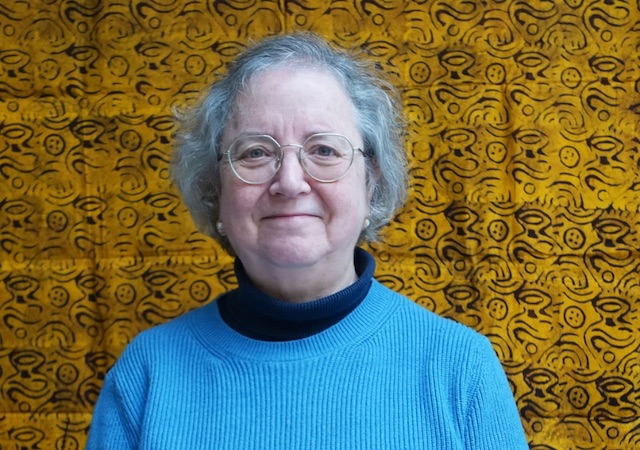
I could not resist putting this on the TRC webpages: an interview with Gillian Vogelsang-E`astwood, director TRC, published by an online news service about the Netherlands. I am very proud of her! Click on the photograph to read the item. Willem Vogelsang.

Gillian Vogelsang-Eastwood, photographed for DutchNews, June 2026.Gillian Vogelsang-Eastwood, photographed for DutchNews, June 2026.

Subcategorieën

Zoek in TRC website

Contact

Boerhaavelaan 6
2334 EN Leiden.
Tel. +31 (0)71 5134144 (kantooruren)  
office@trcleiden.org

Het TRC is elke dag geopend tussen 10.00 en 15.00 uur.

facebook 2015 logo detail


instagram vernieuwt uiterlijk en logo


Bankrekening

NL39 INGB 0002 9823 59, t.a.v. Stichting Textile Research Centre.

Financiële giften

Het TRC is afhankelijk van project-financiering en privé-donaties. Al ons werk wordt verricht door vrijwilligers. Ter ondersteuning van de vele activiteiten van het TRC vragen wij U daarom om financiële steun:

Giften kunt U overmaken op bankrekeningnummer (IBAN) NL39 INGB 000 298 2359, t.n.v. Stichting Textile Research Centre. BIC code is: INGBNL2A

U kunt ook, heel simpel, indien u een iDEAL app heeft, de iDEAL-knop hieronder gebruiken en door een bepaald bedrag in te vullen: 


Omdat het TRC officieel is erkend als een Algemeen Nut Beogende Instelling (ANBI), en daarbij ook nog als een Culturele Instelling, zijn particuliere giften voor 125% aftrekbaar van de belasting, en voor bedrijven zelfs voor 150%. Voor meer informatie, klik hier