• F3
  • F1
  • F2
  • F4

This mini-exhibition at the TRC is curated by Minsook Kang, who is an intern at the TRC from the Gerrit Rietveld Academie in Amsterdam. She is a visual artist and researcher working across textiles, moving images, installations and publications. She explores stories, memory, and embodied knowledge through forms of care, attention, and material engagement. In the summer of 2026 she visited the island of Buton in Sulawesi Province, Indonesia. For an extentive blog on the subject, written by Minsook Kang, click here.
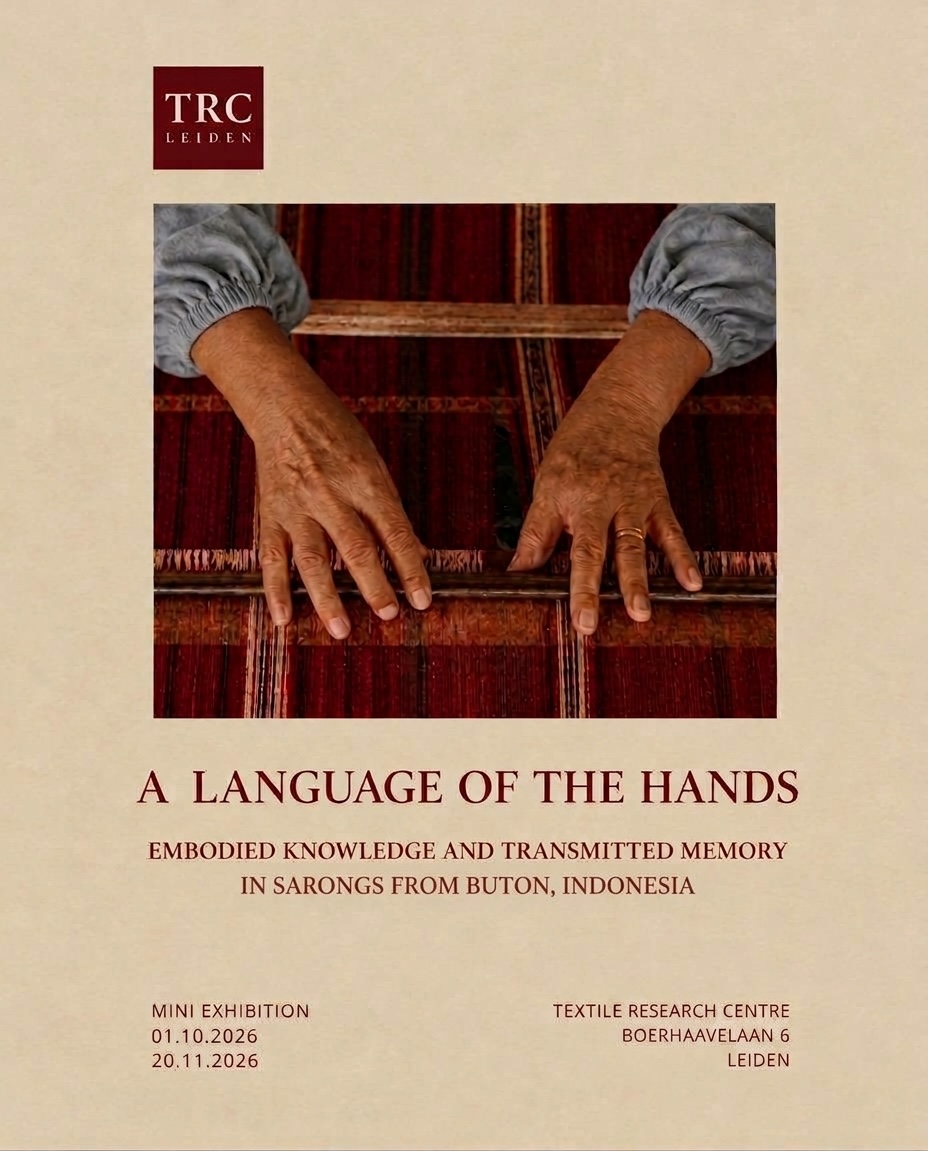
A Language of the Hands - Embodied Knowledge and Transmitted Memory in Indonesian Buton Sarongs explores the Buton sarong as a form of embodied and transmitted knowledge.

Drawing on TRC collections and fieldwork in the town of Baubau, the exhibition traces how patterns, motifs, weaving practices, and memories that are  transmitted across generations through speech, observation, and the hands. As a strong oral tradition culture, the sarong emerges as a living textile language shaped by everyday life, nature, and generations of makers.

A Language of the Hands can be visited until 20th of November 2026. The TRC is open every weekday from 10.00 to 15.00.
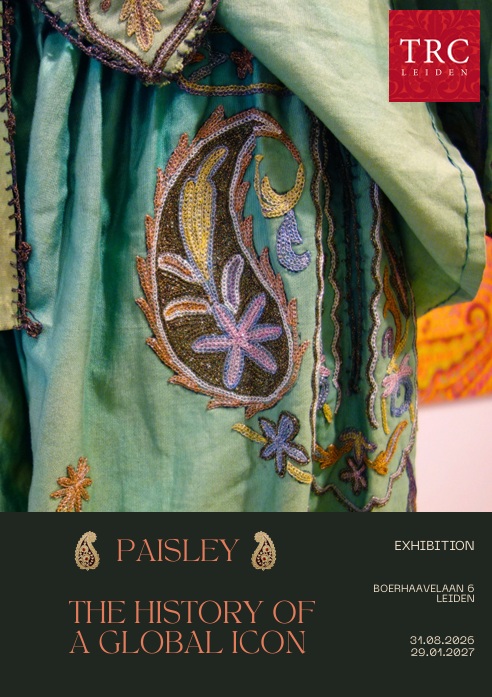
On 31 August, the TRC opened its doors for a new exhibition: Paisley: The History of a Global Icon (by the curator, Augusta de Gunzbourg)

The new Paisley exhibition at the TRC. Photograph by the curator, Augusta de Gunzbourg.The new Paisley exhibition at the TRC. Photograph by the curator, Augusta de Gunzbourg.We all know the motif, that cone shape that is curved at the top, which is found on Kashmir shawls, men’s ties, 1970’s hippie prints, or even on cowboy bandanas. Paisley is everywhere !

It is so well-known that it is generally accepted as just being one of those patterns that have always been there, but we rarely think think about its origins and why it is so popular all over the world.

The TRC exhibition is a re-edited, expanded version of one of its past, and online exhibitions (interrupted by the COVID-pandemic) about the famous Paisley motif, and this time mounted in the TRC's new premises along the Boerhaavelaan (No.6) in Leiden.

The exhibition explores the history of the Paisley motif, its ancient origins and its development to the present day. It also looks at how it is currently used for a wide variety of textiles and garments all over the globe.

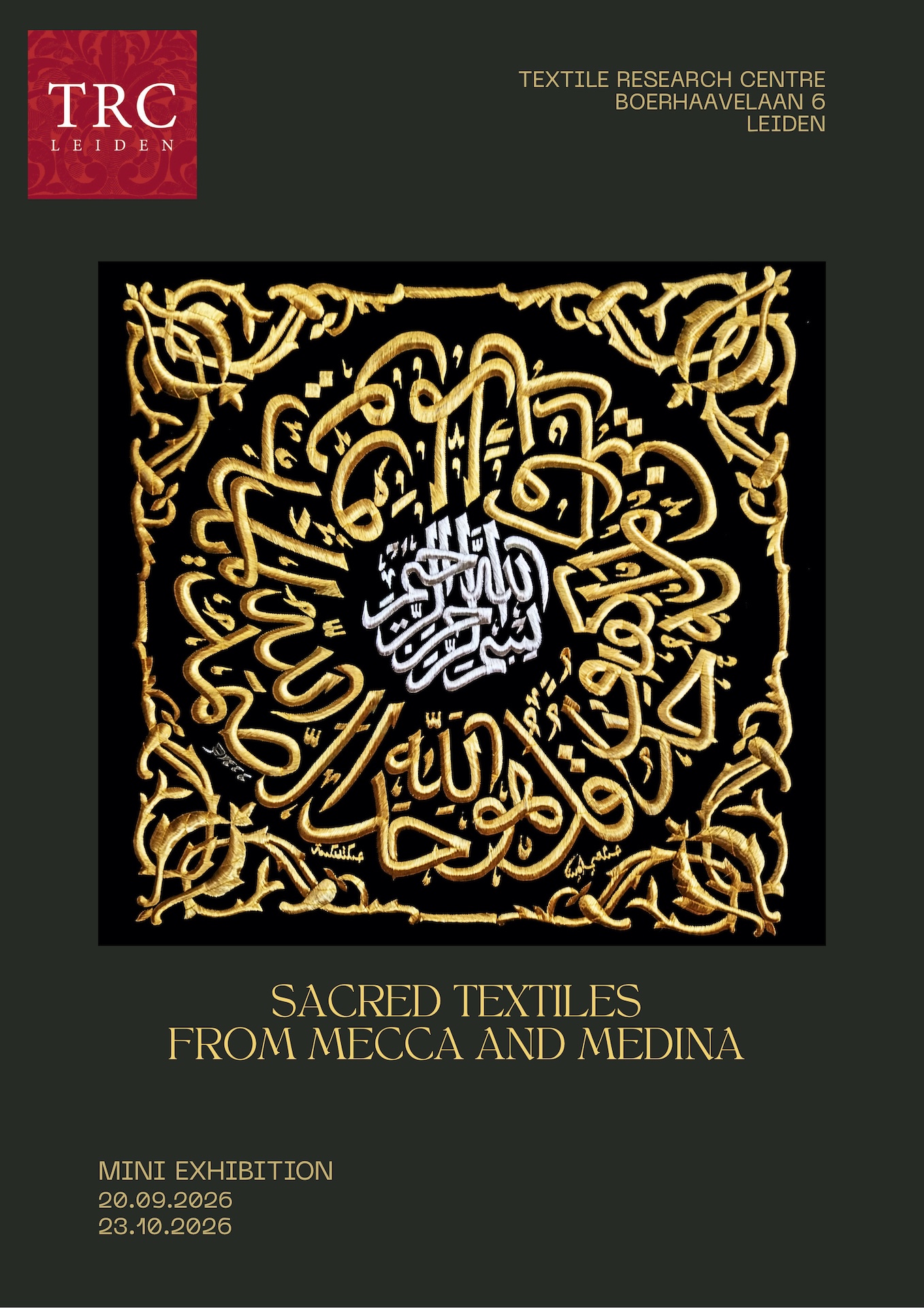
(Gillian Vogelsang, 21 September 2026) "The TRC and the Stichting Güney are proud to present …. " This may sound like a cliché but in this case it is totally true. We were and are proud of the 'Sacred Textiles from Mecca and Medina' mini-exhibition, which was opened last Sunday, 20th September, in the presence of the Turkish ambassador designate, Dr. Burak Akçapar.
We have all been working hard for the last few weeks, writing text boards, organising lists of objects, translating texts into Dutch, and checking proposed programmes for this special event. Augusta de Gunzbourg, our curator, did the design layout before she went to a textile conference in Uzbekistan (a blog will shortly be published about her trip).

One of the reasons behind the mini-exhibition was to raise funds to process and store a very large Ottoman and regional Turkish collection that recently has been donated to the TRC (see previous blogs). The Turkish community here in Leiden are taking a very active part in the project and plans are being developed for exhibitions, workshops, lectures, perhaps even fashion shows!

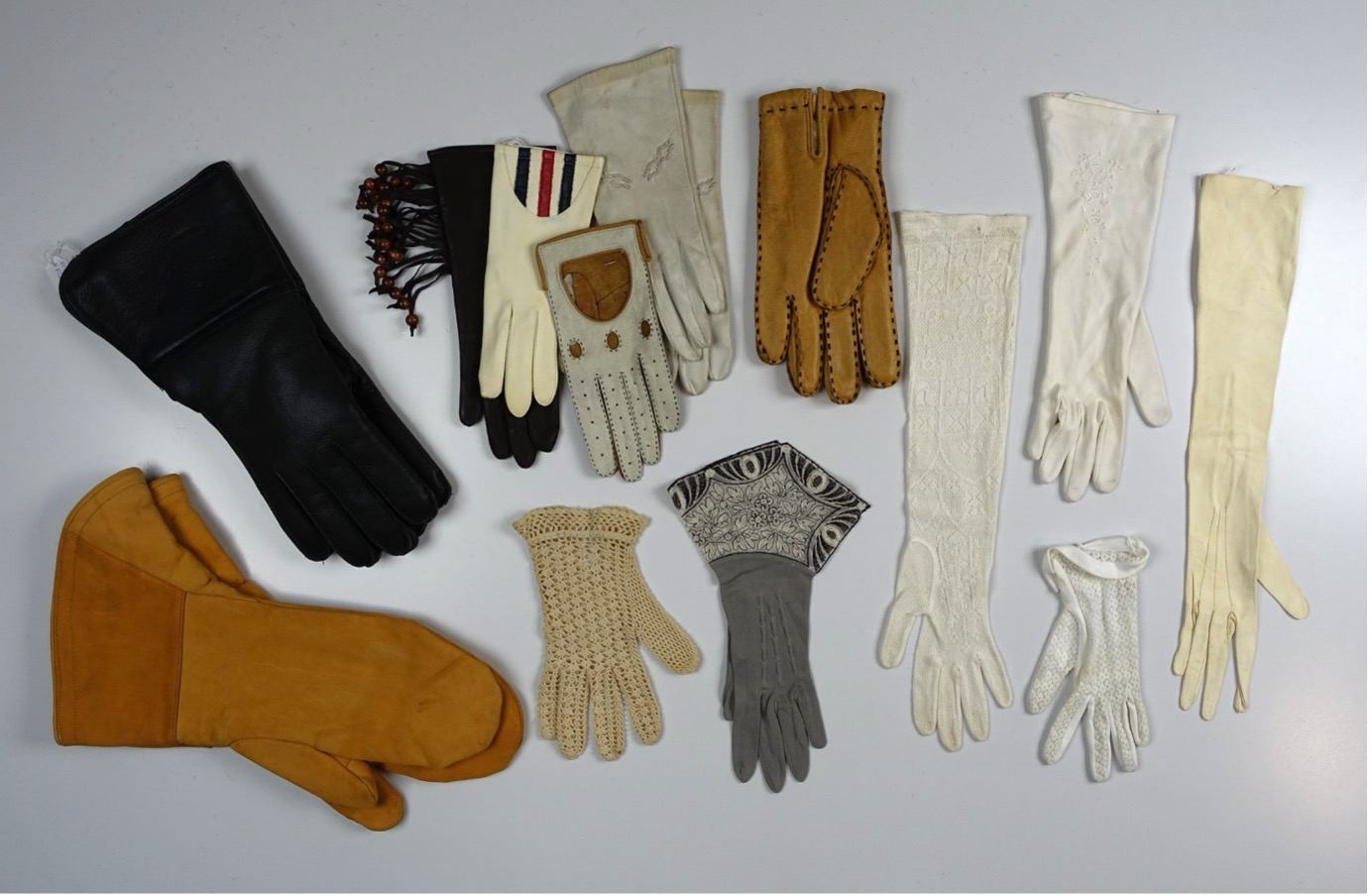
(Emilie Lambert, collection manager, TRC, 17 October 2026) The TRC houses over 300 pairs of gloves, mittens and gauntlets. They are made of leather, wool or silk, in lace or with net work. They may be knitted, and be practical or purely decorative. The sheer variety, both technically and culturally, is fascinating (Fig. 1). Some of the gloves are highlighted in previous blogs, such as one about Scottish examples, written by Hanke van Prooije in 2025.

Fig 1: Assortment of gloves in the TRC collection showing the wide variety in material, shape, and decoration.Fig 1: Assortment of gloves in the TRC collection showing the wide variety in material, shape, and decoration.

Tokyo-based textile designer Hana Mitsui. Photograph: www.hanatextiledesign.comTokyo-based textile designer Hana Mitsui. Photograph: www.hanatextiledesign.com(Flora Kovacs-Wester, TRC Fellow, 12 October 2026) As part of my research into Japanese kasuri weaving (see my earlier TRC blog post), I recently had the opportunity to interview Japanese textile designer Hana Mitsui about her practice and her approach to traditional Japanese textiles.

Drawing on her experience with leading fashion and textile houses in Japan and internationally, Mitsui combines traditional weaving techniques with new approaches to materials, patterns and production. During our conversation, Mitsui generously offered to donate a selection of samples from her experiments with Kurume kasuri to the TRC. The donated samples make a meaningful addition to TRC’s existing collection of traditional kasuri textiles and enable us to expand the ways in which Kurume kasuri can be understood and researched within the TRC collection.

Mitsui’s ability to see new possibilities in fabric caught the attention of the fashion world early in her career. While studying at the Royal College of Art in London, Alexander McQueen selected her graduation textile for its Spring/Summer 2015 Paris collection.

(by Minsook Kang, 14 October 2026) When preparing a mini exhibition at the TRC (click here), the author brought together a selection of sarongs from the island of Buton in Indonesia in order to explore the garment as a form of embodied and transmitted knowledge. This blog introduces the exhibition and provides deeper context concerning Buton sarong traditions - tracing how patterns, motifs, weaving practices, and memories are transmitted across generations through speech, observation, and the hands. Rooted in a strong oral tradition, the sarong emerges as a living textile language, shaped by everyday life, nature, and generations of makers.

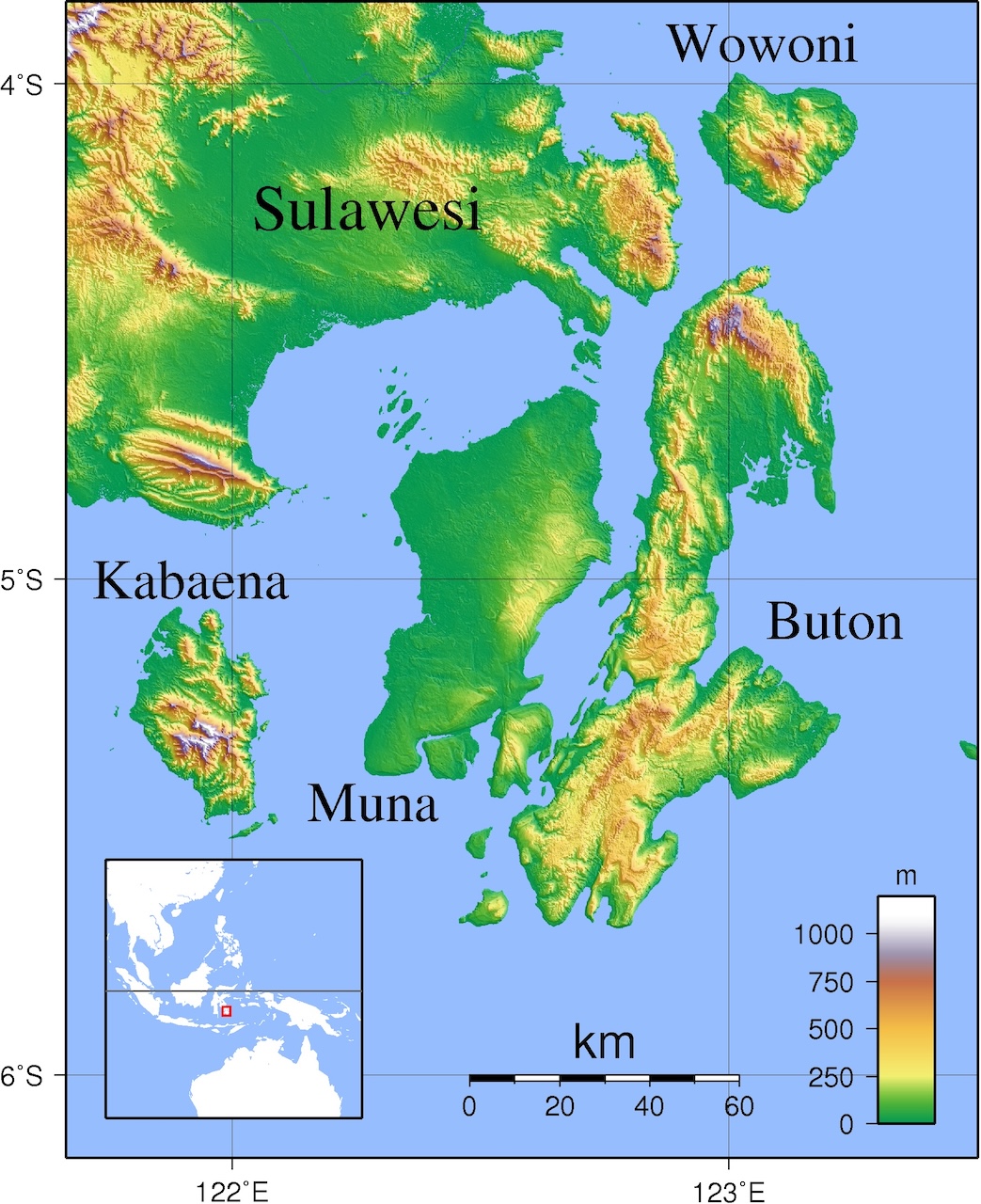
Fig. 1. Map of Buton Island, Sulawesi, Indonesia.Fig. 1. Map of Buton Island, Sulawesi, Indonesia.Minsook Kang is a visual artist and researcher currently studying Textile and Text (TXT) at the Gerrit Rietveld Academie in Amsterdam and working as an intern at the Textile Research Centre (TRC). Her practice explores stories, memory, and embodied knowledge through forms of care, attention, and material engagement, working across textiles, moving image, installation, and publication.

Buton sarongs and the “Language of Hands”

This mini exhibition showcases Indonesian TRC textiles and links them with a project called Native Tongue, bringing together the oral language of the Cia-Cia indigenous community in Baubau, on Buton Island in Southeast Sulawesi, Indonesia, and the textile traditions of the Buton region.

Native Tongue began with the story of the Cia-Cia language and the adoption of Hangul, the Korean alphabet, as a writing system in 2009, in an effort to support the preservation of a predominantly oral language. When I first encountered this story, I was interested in the relationship between oral language, writing, and cultural preservation. However, after visiting Buton Island, I began to realise that the narratives I had encountered from outside the region could not fully describe the complexity of its linguistic and social realities.

Het TRC werkt op projectbasis en met financiële donaties uit officiële, commerciële en particuliere bronnen. De financiering wordt gebruikt voor speciale projecten, het in stand houden van de collectie, het opzetten van tentoonstellingen en algemene lopende kosten. Door de jaren heen hebben we veel Vrienden gehad die het werk van het TRC ondersteunen met donaties, zowel financieel als materiaal voor de collectie.

In de afgelopen 30 jaar is de TRC-collectie gegroeid van veertig items tot meer dan 42.000 gecatalogiseerde items. Sinds 2009 is de collectie ondergebracht bij Hogewoerd 164 in Leiden. De opening van deze site maakte ook de uitbreiding van educatieve activiteiten en tentoonstellingen van de groeiende collectie mogelijk. We bevinden ons opnieuw op een kritiek moment in onze groei. We hebben bijna geen ruimte meer voor de collectie, werkruimte en klaslokaal. We hebben onze vrienden nog meer nodig. Tegelijkertijd proberen we de groeiende collectie en het educatieve programma onder te brengen in onze huidige ruimte EN zijn we op zoek naar een nieuwe ruimte. We zijn voorzichtig in deze moeilijke economische tijden, maar hebben goede hoop in de wetenschap dat een nieuwe ruimte ons vermogen om zelfvoorzienend te zijn zal vergroten, omdat we meer workshops kunnen bieden en efficiënter kunnen werken.

Word een deel van onze toekomst en word lid van ons ondersteuningsnetwerk door Vriend van de TRC te worden. Om onze waardering te tonen ontvangt u 10% korting op artikelen in onze winkel, lezingen, cursussen (m.u.v de intensieve 5-daagse cursussen) en workshops. Daarnaast maken alle leden vier keer per jaar kans op een tombolaprijs.

Jaarlijkse bijdrage is  €75; een levenslang lidmaatschap is €500.

Om vriend te worden van het TRC, neemt u alstublieft contact op met ons op het volgende adres: Dit e-mailadres wordt beveiligd tegen spambots. JavaScript dient ingeschakeld te zijn om het te bekijken. met als onderwerp: Lidmaatschap Vrienden van het TRC.

Fiscaal voordeel van doneren aan TRC Leiden

Stichting Textile Research Centre is officieel erkend als een non-profit organisatie, een "Culturele ANBI" (Algemeen Nut Beogende Instelling) waarbij giften niet onderworpen zijn aan schenkings- of successierechten en fiscaal aftrekbaar zijn. Uw financiële bijdrage aan de TRC als Vriend is aftrekbaar voor de jaarlijkse belastingaangifte, tot 125% van het bedrag voor particulieren en tot 150% voor bedrijven. U ontvangt hiervoor een ontvangstbevestiging van uw bijdrage aan het TRC. Daarna hoeft u alleen nog maar het bedrag van uw schenking aan te geven in uw jaarlijkse belastingaangifte en het vakje “Culturele ANBI” aan te vinken.

Become a friend of TRC

Annual membership fee is €75; lifetime membership fee is €500
reCAPTCHA Selectievakje: Vul uw Site en Secret Key in op de configuratie pagina.


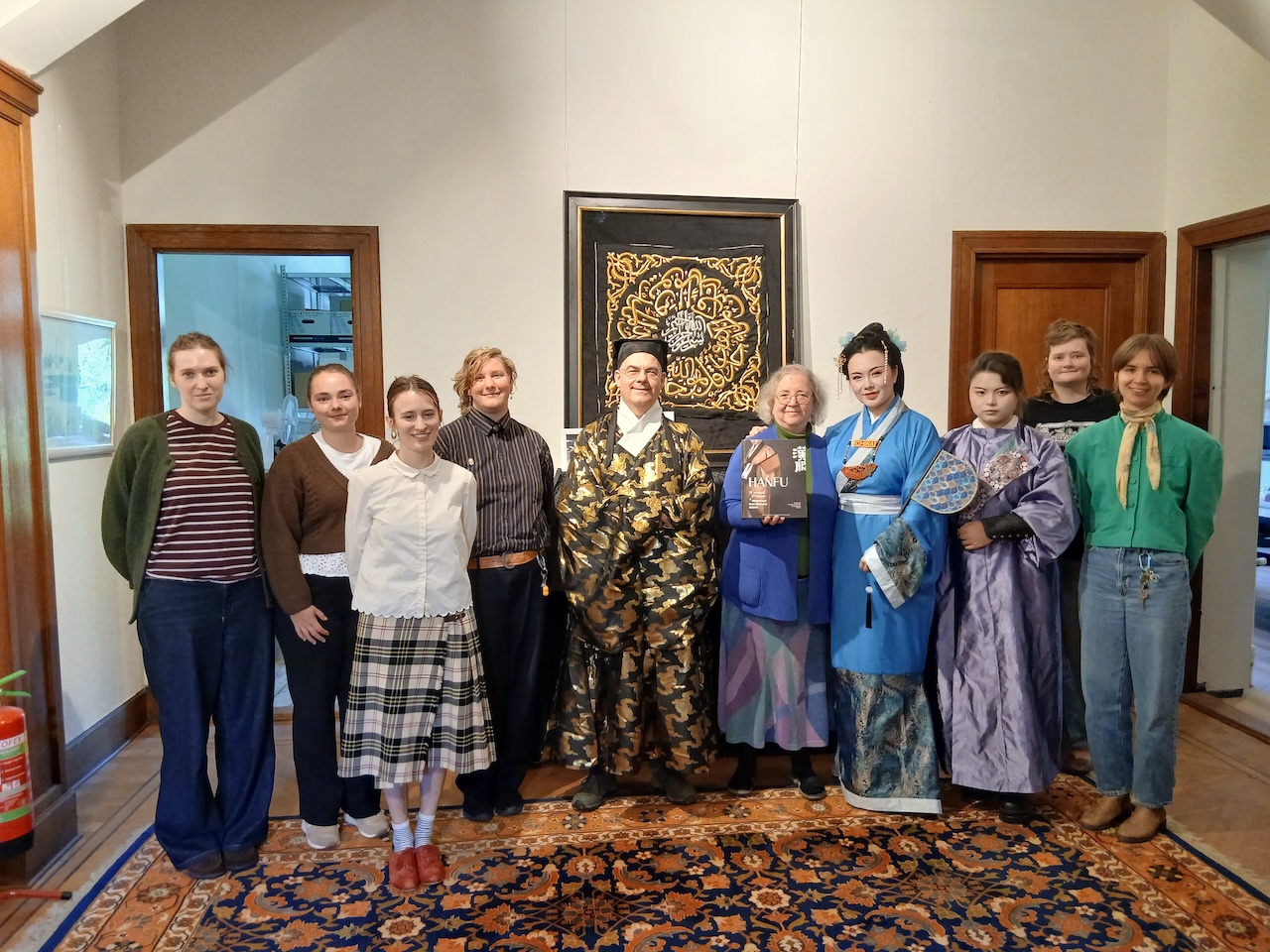
(Gillian Vogelsang, 5 October 2026) A few days ago, Danni Wang, who is of Chinese origin and lives in The Netherlands, came to the TRC with two of her friends, all of whom were dressed in Hanfu. They looked so different and ‘exotic’. And yes, that was the whole point. Hanfu has become more and more popular over the last twenty or so years with many Chinese, both in China itself and among the diaspora, as well as others who love Chinese history and culture.

Our guests in Hanfu clothing at the TRC, 5 October 2026.Our guests in Hanfu clothing at the TRC, 5 October 2026.

Subcategorieën

Zoek in TRC website

Contact

Boerhaavelaan 6
2334 EN Leiden.
Tel. +31 (0)71 5134144 (kantooruren)  
office@trcleiden.org

Het TRC is elke dag geopend tussen 10.00 en 15.00 uur.

facebook 2015 logo detail


instagram vernieuwt uiterlijk en logo


Bankrekening

NL39 INGB 0002 9823 59, t.a.v. Stichting Textile Research Centre.

Financiële giften

Het TRC is afhankelijk van project-financiering en privé-donaties. Al ons werk wordt verricht door vrijwilligers. Ter ondersteuning van de vele activiteiten van het TRC vragen wij U daarom om financiële steun:

Giften kunt U overmaken op bankrekeningnummer (IBAN) NL39 INGB 000 298 2359, t.n.v. Stichting Textile Research Centre. BIC code is: INGBNL2A

U kunt ook, heel simpel, indien u een iDEAL app heeft, de iDEAL-knop hieronder gebruiken en door een bepaald bedrag in te vullen: 


Omdat het TRC officieel is erkend als een Algemeen Nut Beogende Instelling (ANBI), en daarbij ook nog als een Culturele Instelling, zijn particuliere giften voor 125% aftrekbaar van de belasting, en voor bedrijven zelfs voor 150%. Voor meer informatie, klik hier.