In 2024 the TRC organised many workshops and other events, welcomed individuals and groups of people from all over the world, and in general propagated interest in the fascinating world of textiles. Various blogs were written afterwards that reported on the meetings, such as a study day on frivolité (12 March), a visit by students from the Royal Academy of Arts in The Hague (13 March), and a special day dedicated to an essental element of almost all textiles, namely the thread (15 March). All three visits are reported in a blog by Gillian Vogelsang and can be downloaded here. A group of TRC volunteers visited Finland in the spring of 2024 to study teaching initiatives (click here). There was also a special day on ikat, on 11 June (click here to download a report). Below we want to highlight some of the other TRC activities in 2024.
TRC project: Engaging Textile Heritage Communities through Citizen Culture
by Maria Linkogle
In 2024, TRC finished an Erasmus+ project which began in 2022. In total, there were two training events, one study trip for the volunteer staff and three study trips for adult participants in the project Engaging Textile Heritage Communities through Citizen Culture.
 erasmus logoThe first training was in Portugal and was aimed at increasing cultural participation for those who are at risk of social exclusion. The second training event, which took part on Cyprus, was for teambuilding.
This project also allowed for us to give an opportunity to fifteen of our adult education participants to explore textiles and their connection to culture in Berlin, Venice and Brussels. This project was 100% funded by Erasmus+.
We were able, for example, to welcome a group of Turkish women from Stichting Guney, and an international group of women, now living in Leiden, from Huis van de Morschwijck, which is an embroidery group of women from Syria, Jordan, Iraq, Iran and Afghanistan now living in Leiden. They study and practise embroidery. from their homeland.
They came to the TRC to discuss cultural textile heritage and look at items form their particular places of birth. The group from Stichting Guney gave a presentation of the traditional Henna party, held for a bride just before her wedding. Two other individuals, a Palestinian woman from Syria and a woman from Indonesia, worked together on the exhibition VERBINDING displaying textiles that evoke memories and emotions.
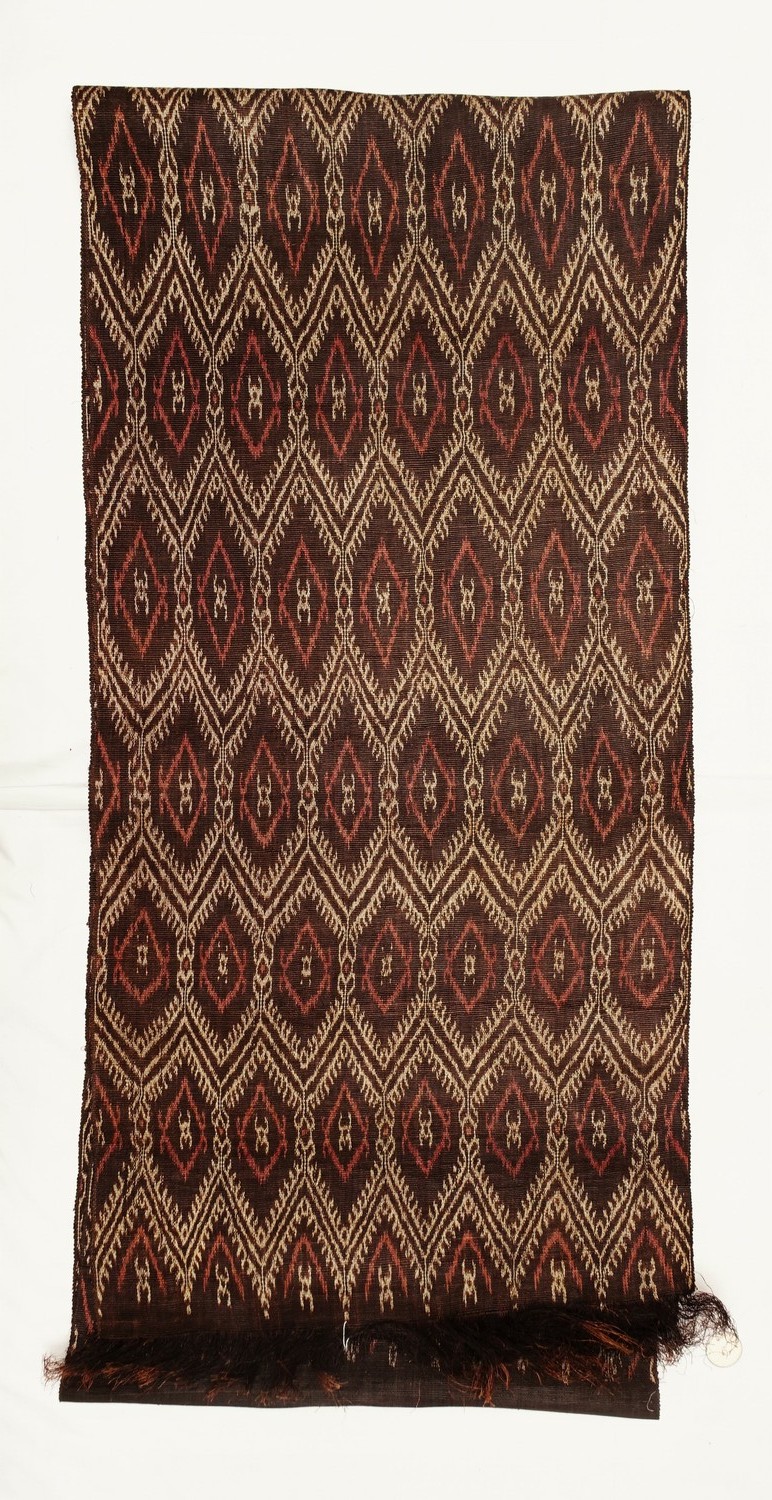 Ikat cloth from Mindanao, Philippines, 20th century (TRC 2022.2914).Visit by HE J. Eduardo Malaya, the Ambassador of the Philippines
On Saturday, 22 April 2024, the TRC welcomed HE J. Eduardo Malaya, the Ambassador of the Philippines to The Hague, together with Dr Stephanie Coo and Carlos González.
They are interested in the Philippine collection that was given to the TRC a few years ago by Ruurdje Laarhoven, a Dutch academic living in the US, who worked for many years in the Philippines (click here).
Stephanie Coo is interested in the idea of setting up a regional dress institute and collection in the Philippines and is visiting various institutes to get ideas. We have offered the assistance of the TRC in giving practical advice in how to set up and run a small knowledge centre of this type.
The idea was also raised of being able to offer a ‘Researcher in Residence’ position for one to four weeks. This is a very appealing concept and would mean we could add depth to the TRC Collection by being able to have specialists look at various aspects of our textiles, dress and accessories collection.
Visit of representatives of the Department of Industrial Design, Eindhoven University of Technology
On 5 June 2025 the TRC had a special visit from the Department of Industrial Design, Eindhoven University of Technology. Dr. Kristina Andersen and Dr. Bruna Goveia da Rocha came to Leiden to talk about the setting up of a textile archive in Eindhoven, in order to help designers and students at the university.
During the discussions it was noted that many modern textiles are becoming flatter, as physical weaving skills (especially of textured forms) are not passed on to the same extent as before – they are regarded as too difficult by some!
Furthermore, the use of computer screens to design particular weaves and printed textiles means that many designers are no longer used to handling 'real' textiles. So textile archives, such as the TRC Collection, are needed to provide more data and inspiration, and people are coming to the TRC to see our collections and learn how to set up their own collection.
The idea of the TRC as an international hub for textile knowledge in all the depth and width of this huge, thematic subject is basically no longer a pipe-dream, as far as we are concerned, it is the TRC’s reality! More meetings will be held with colleagues from Eindhoven in due course to discuss further ways of working together. One of the more concrete plans is to set up a joint exhibition about samplers and their design histories and uses!
What have these diverse groups, such as the delegation from Eindhoven, have in common? Simply, an interest ( in some cases bordering on obsession) in textiles. These meetings are important to the TRC, not only to 'give' information, access to the collection, etc., but also to 'absorb' the sometimes priceless knowledge that our visitors are happy to share, and we are more than willing to listen to them and include their knowledge into our blogs, databases and other forms of communication. No knowledge should ever go wasted!
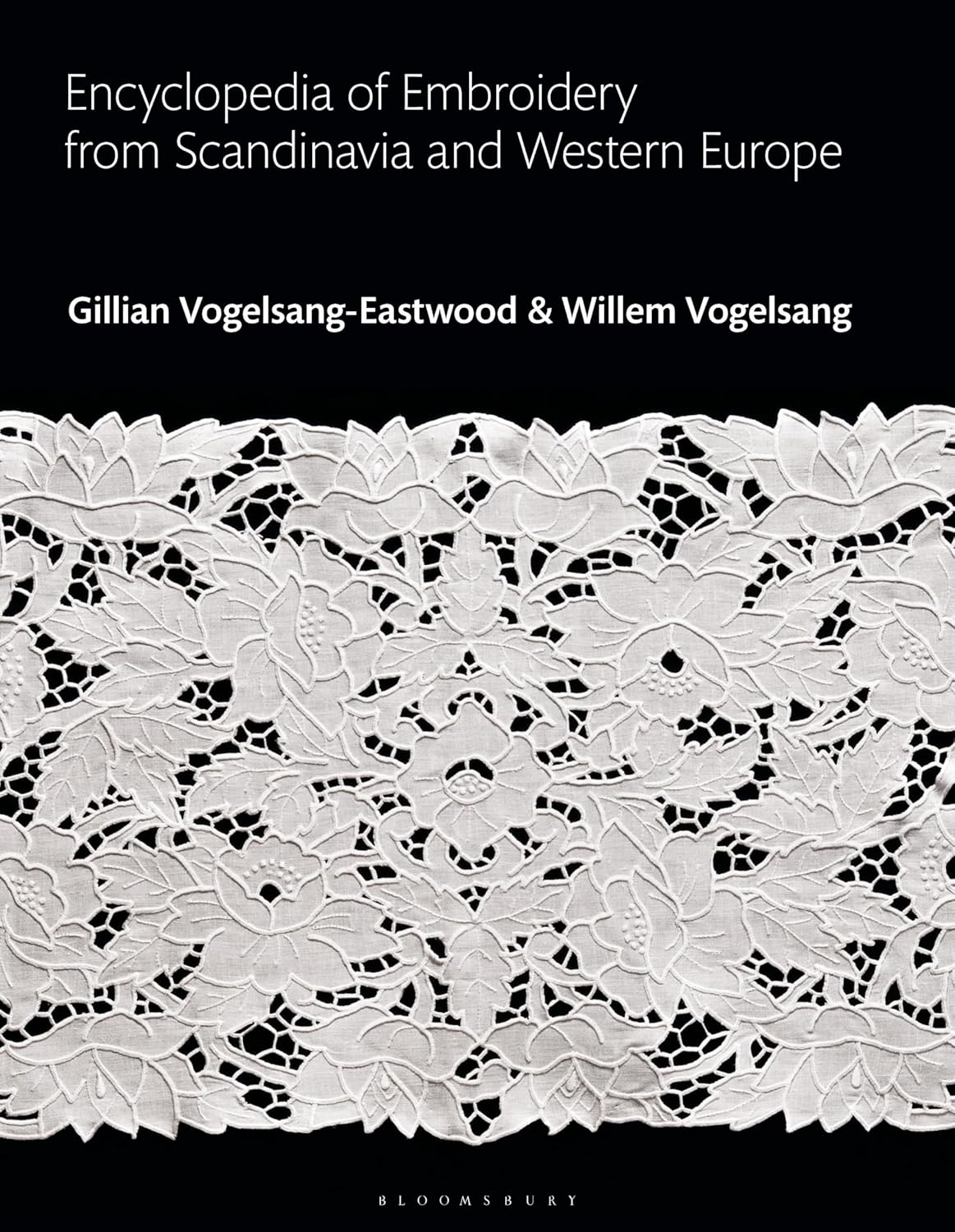 Bloomsbury's Encyclopedia of World Embroidery
In December 2024, Bloomsbury (London) published the fourth volume of Bloomsbury's World Encyclopedia of Embroidery: Embroidery from Scandinavia and Western Europe, composed under the aegis of the Textile Research Centre (TRC). Authors: Gillian Vogelsang-Eastwood and Willem Vogelsang.
This is the first reference work to describe the history of embroidery throughout Scandinavia and Western Europe from the Bronze Age to the present day. It offers an authoritative guide to all the major embroidery traditions of the region and a detailed examination of the material, technical, artistic and design aspects of the subject, including its modern-day uses.
With 76 chapters and 634 illustrations (554 in colour) of clothes, accessories and decorated soft furnishings (floor coverings, wall hangings, curtains, bed linen), this Encyclopedia is an invaluable resource for students and scholars of the subject.
This volume is part of the Bloomsbury's World Encyclopedia of Embroidery series. The first volume, on embroidery from the Arab World, won the 2017 Dartmouth Medal, awarded by the American Library Association for a reference work of outstanding quality and significance. The second volume covered Central Asia, the Iranian Plateau and the Indian subcontinent, and was published in 2021. The third volume, on Sub-Saharan Africa, appeared in 2023.
See also:


 Metal button with a five-petalled flower and a key shank with a tiny hole. Part of the button has broken off. Medieval. TRC 2024.2625.
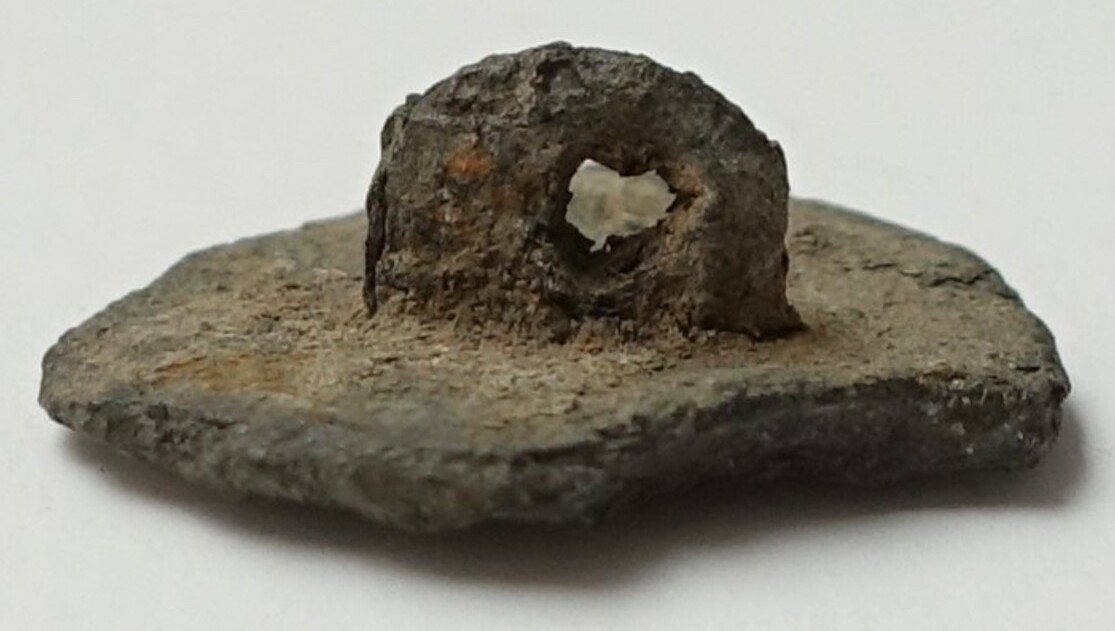 Key shank with tiny hole. Metal button TRC 2024.2625.