• F4
  • F1
  • F3
  • F2

CONTESSA, Andreina (2016). The Jewish Court of Venice: The heritage of Jewish Venice 500 years after the establishment of the first ghetto, Jerusalem: National Museum of Italian Jewish Art. ISBN 978-965-572-097-6, soft back, 55 pp. in English, 35 pp. in Hebrew, fully illustrated in colour and black/white.

A small catalogue to an exhibition held at the National Museum of Italian Jewish Art in Jerusalem [see TRC Blog]. There are many synagogue (notably scroll covers) and private textiles illustrated and described in the book. In addition, it looks at the role of women in making, using and in some cases, re-using textiles. It includes woven, embroidered as well as lace forms (including needle laces). In addition to the textiles, various other items such as scroll crowns and finials, contemporary illustrations, manuscripts, and so forth, are illustrated and described.

Recommendation: There are various books on Ashkenazim and Sephardim Jewish textiles, but comparatively very little about another important group, the Italian Jews. This booklet helps to redress this imbalance. It will be of interest to anyone working or interested in the role of textiles in Jewish synagogues, Jewish life in general, as well as those specifically interested in the Italian Jewish tradition.

Gillian Vogelsang-Eastwood, March 2020.

MASKARELI, Draginja (2019). МОΔΑ (Fashion in Modern Servia), Belgrade: Museum of Applied Art. ISBN 978-86-7415-217-1, soft back, fully illustrated in colour and b/w, 143 pp., bibliography, no index.

This is a catalogue to an exhibition held at the Museum of Applied Art, Belgrade from November 2019 to the end of January 2020. The text is in Serbian with an English summary. The exhibition is based on items in the collection of the museum and includes a wide range of items for women from the 19th and early 20th centuries. In addition at the back of the book there are a few items for men, but not many.

For historical and geographical reasons there are items of Ottoman and Balkan styles, as well as West European fashions. Some of these garments were worn together. In addition, a wide range of accessories are illustrated including hats, glasses, hair combs, shawls, parasols, belts and footwear. The boots, shoes and slippers show a wide range of influences, including knee-high boots decorated with Central Asian suzani-style embroidery and ankle boots in the French style.

The whole exhibition stresses local, national as well as international forms worn by urban women in what is now Serbia. Not a remote part of Europe, but a cross-roads between Asia, the Balkans and Europe.  

Recommendation: A book that will be of interest to anyone intrigued by fashion, and what may now be called fusion fashion, the combination of various traditions brought together by political, economic and geographical reasons. A visually inspirational book.

Gillian Vogelsang-Eastwood, March 2020.

For more information, click on the illustration.For more information, click on the illustration.ESGUERRA, Clarissa M. (2019). Power of Pattern: Central Asian Ikats from the David and Elizabeth Reisbord Collection, Los Angeles: LACMA Collator. ISBN 978-1-943042-13-5, hardback, 112 pp., fully illustrated in colour, bibliography, glossary. Price US$ 50.

An exhibition catalogue to a lovely exhibition about ikat garments and textiles from Central Asia that date from the 19th and early 20th centuries. These garments formed part of the David and Elizabeth Reisbord collection that is now in the Los Angeles County Museum of Art (LACMA). The exhibition was well worth seeing [see the TRC blog about the exhibition].

In general, the book is based on the main types of motifs (ram, tree, etc.,) associated with Central Asian textiles, including ikat forms. In addition, the exhibition and book stress the aesthetics of ikat textiles, which is always a difficult subject as what is acceptable in one culture may not be deemed correct in another. The grouping of some of the objects in the exhibition and the book was deliberately meant to challenge Western (American) viewers.

Recommendation: This book is worth having in any library dedicated to Central Asian textiles and ikats in particular. There are some very interesting and visually pleasing garments presented in the publication. It should be noted, however, that there is very little information about how ikats were physically produced and by whom. In addition, this is a print-on-demand publication and it looks it: there are many blank pages, etc., in the copy now in the TRC Library.

Gillian Vogelsang-Eastwood, March 2020.

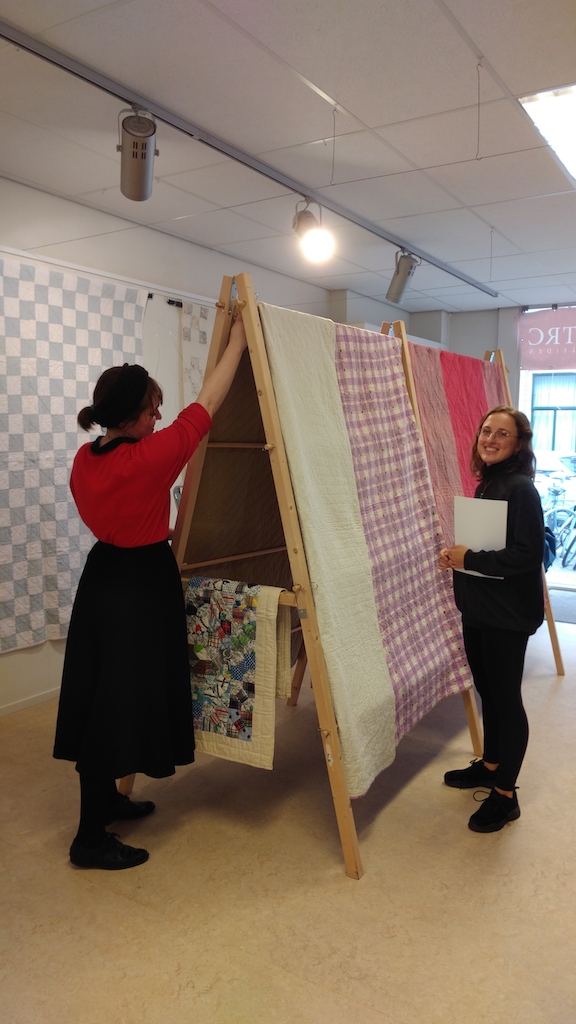
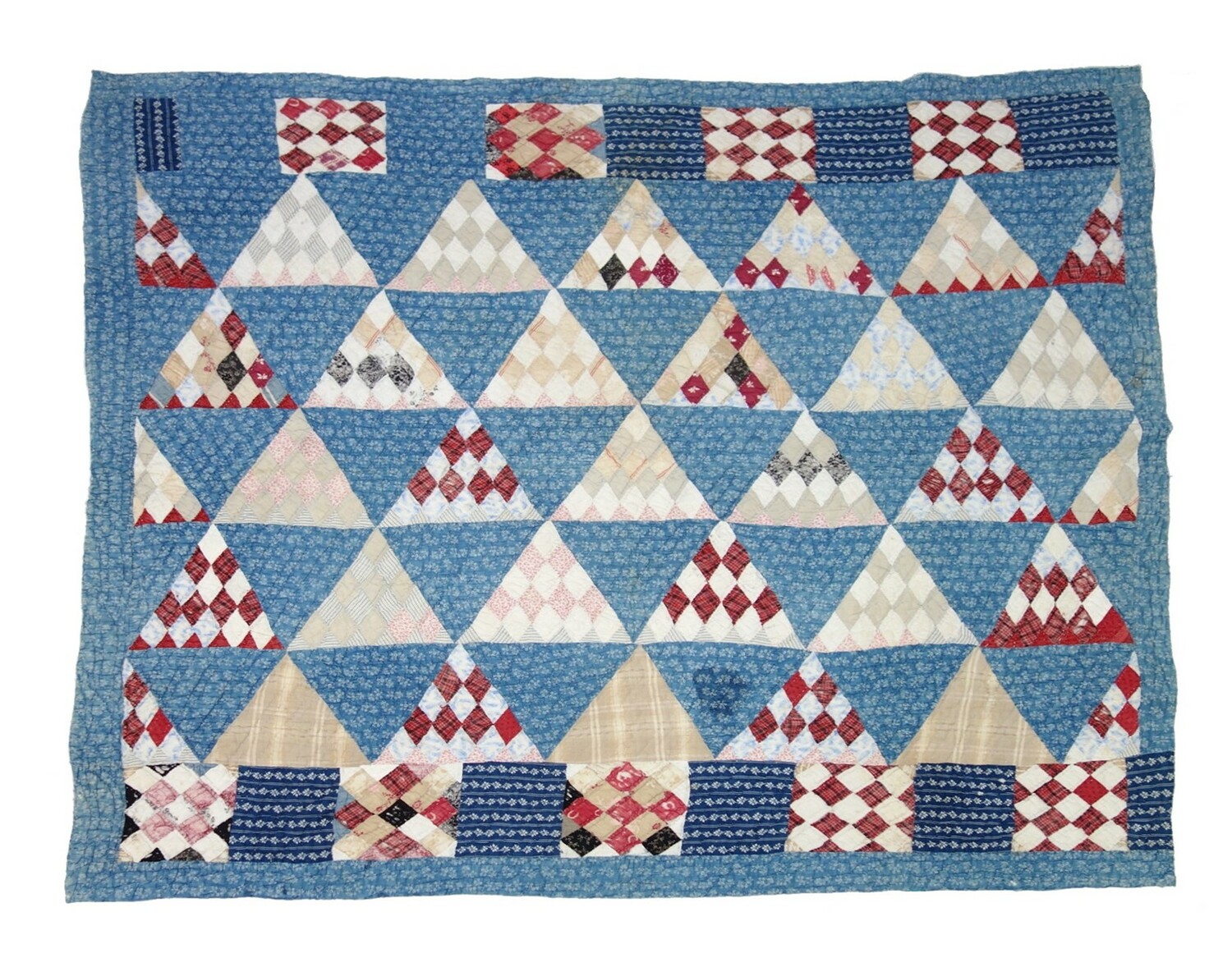
Amerikaanse quilt van ca. 1840, uit de collectie van het TRC (TRC 2018.3119). Voor meer informatie, klip op de illustratie.Amerikaanse quilt van ca. 1840, uit de collectie van het TRC (TRC 2018.3119). Voor meer informatie, klip op de illustratie.In bijna alle Amerikaans huizen is wel een quilt te vinden. Quilts zijn ook te zien in films, boeken en verhalen over het leven in de VS.

In de tentoonstelling worden de geschiedenis en de betekenis van quilts, en het ambacht van het maken ervan getoond.

De tentoonstelling vertelt over wat quilts zijn, hoe ze worden gemaakt, waarom en hoe quiltblokken worden gemaakt en welke andere technieken worden gebruikt om de variëteit aan vaak kleurrijke ontwerpen te maken.

Aan de hand van enkele quilts reflecteert de tentoonstelling ook op economische, religieuze, politieke en sociale veranderingen in de VS, evenals op de rol van vrouwen in het huis en op het werk.

Het TRC herbergt een van de grootste Amerikaanse quiltcollecties in Europa, en naast volledige quilts zullen ook quilttops, quiltblokken, materialen, gereedschappen en aanverwante artikelen te zien zijn.

De tentoonstelling bevat quilts van vóór de Amerikaanse burgeroorlog (1861-1865), het late Victoriaanse tijdperk, de Grote Depressie van de jaren 1930 en de heropleving van het quiltambacht in de jaren 1970.

Voor een foto-impressie van de tentoonstelling, klik hier.

Een baan fluweel uit Italië met een klassiek bloemenpatroon (TRC 2018.2510).Een baan fluweel uit Italië met een klassiek bloemenpatroon (TRC 2018.2510).Fluweel is een rijk, gevarieerd en veelzijdig soort textiel dat op veel verschillende en soms verrassende manieren kan worden gebruikt. Fluweel wordt gebruikt voor kleding die het lichaam soms letterlijk van top tot teen bedekt en die door zowel mannen, vrouwen als kinderen wordt gedragen. In huisdecoratie wordt fluweel toegepast in gordijnen en wand- en vloerbedekking, maar ook in de stoffering van meubels.

De tentoonstelling omvat fluweel daterend uit de late vijftiende eeuw tot heden. Er zijn meer dan 100 kledingstukken en stukken textiel te zien, gemaakt van onder andere katoen, linnen, mohair en zijde. Er is wollen fluweel (waarvan een deel door bezoekers mag worden aangeraakt), katoenen fluweel, Kuba-fluweel uit Congo, fluwelen kinderkleding, trouwjurken, en niet te vergeten een brede collectie fluwelen hoeden!

De tentoonstelling is te zien tot/met donderdag 27 juni 2019.

Prentbriefkaart en postzegel van een 19de eeuws schilderij van een vrouw in een fluwelen jasje, Hongarije (TRC 2018.2544).Prentbriefkaart en postzegel van een 19de eeuws schilderij van een vrouw in een fluwelen jasje, Hongarije (TRC 2018.2544).

Het luxe karakter van fluweel wordt duidelijk gemaakt door een stuk zogenaamd velours d'Utrecht (gemaakt van mohair), en een stuk geperst fluweel, zoals gebruikt in de Tweede Kamer in Den Haag voor een muurdecoratie. Er is  zelfs een staal fluweel zoals gebruikt in de Troonzaal van het Koninklijk Paleis in Madrid.

De tentoonstelling Fijn Fluweel! werd officieel geopend op 22 januari door de Wethouder Culltuur van de Gemeente Leiden, Mevr. Yvonne van Delft. 

Voor een inleiding op fluweel, klik hier. Voor een lijst met alle kledingstukken en textiel die in de tentoonstelling zijn opgenomen, klik hier.


De tentoonstelling is mede mogelijk gemaakt door Lunsingh Meubelstoffering en Zitmeubelrestauratie, Leiden.


7000 years of hand woven textiles in one exhibition!

TRC Gallery exhibition, 26 May – 23 September 2014

Woman in Lima, Peru, with backstrap loom. Photograph: Jefke van ItersonWoman in Lima, Peru, with backstrap loom. Photograph: Jefke van ItersonThe Gallery exhibition at the Textile Research Centre, Leiden, is a must for textile lovers.

The exhibition includes some of the oldest textiles in the world. They come from Çatal Hüyük (Turkey). These tiny fragments are about 7000 years old, and what a story they tell about the long history of hand weaving! Other unusual items on display include textiles that were originally wrapped around the Dead Sea Scrolls, examples of Coptic tapestries from Egypt, as well as medieval and Renaissance velvets and silk woven textiles. All of them are hand woven!


Following an article about the TRC in a national Dutch newspaper (Trouw, 22 October 2011), the TRC was approached about the potential donation of a collection of European textiles from the sixteenth to the early nineteenth centuries. These pieces formed part of the collection of the Van Gerwen-Lemmens Museum, Valkenswaard, which was forced to close down in 2008. After a visit by TRC staff to Valkenswaard on November 12, Mrs. Van Gerwen very kindly donated 101 textiles to the TRC.

Most of the textiles date to the 18thcentury and include velvets, brocades and damasks. In addition, there are a few printed and embroidered pieces. There were also several, very rare ‘Coptic’ silk embroideries dating from the sixth to the seventh centuries AD. These include scenes depicting what appears to be Christ and various saints.

The acquisition of these pieces means that the TRC’s collection will take on a greater depth with respect to quality and range of subjects. The textiles will be on display at the TRC Gallery as part of a special exhibition, from June to September 2012.

Het TRC werkt op projectbasis en met financiële donaties uit officiële, commerciële en particuliere bronnen. De financiering wordt gebruikt voor speciale projecten, het in stand houden van de collectie, het opzetten van tentoonstellingen en algemene lopende kosten. Door de jaren heen hebben we veel Vrienden gehad die het werk van het TRC ondersteunen met donaties, zowel financieel als materiaal voor de collectie.

In de afgelopen 30 jaar is de TRC-collectie gegroeid van veertig items tot meer dan 42.000 gecatalogiseerde items. Sinds 2009 is de collectie ondergebracht bij Hogewoerd 164 in Leiden. De opening van deze site maakte ook de uitbreiding van educatieve activiteiten en tentoonstellingen van de groeiende collectie mogelijk. We bevinden ons opnieuw op een kritiek moment in onze groei. We hebben bijna geen ruimte meer voor de collectie, werkruimte en klaslokaal. We hebben onze vrienden nog meer nodig. Tegelijkertijd proberen we de groeiende collectie en het educatieve programma onder te brengen in onze huidige ruimte EN zijn we op zoek naar een nieuwe ruimte. We zijn voorzichtig in deze moeilijke economische tijden, maar hebben goede hoop in de wetenschap dat een nieuwe ruimte ons vermogen om zelfvoorzienend te zijn zal vergroten, omdat we meer workshops kunnen bieden en efficiënter kunnen werken.

Word een deel van onze toekomst en word lid van ons ondersteuningsnetwerk door Vriend van de TRC te worden. Om onze waardering te tonen ontvangt u 10% korting op artikelen in onze winkel, lezingen, cursussen (m.u.v de intensieve 5-daagse cursussen) en workshops. Daarnaast maken alle leden vier keer per jaar kans op een tombolaprijs.

Jaarlijkse bijdrage is  €75; een levenslang lidmaatschap is €500.

Om vriend te worden van het TRC, neemt u alstublieft contact op met ons op het volgende adres: Dit e-mailadres wordt beveiligd tegen spambots. JavaScript dient ingeschakeld te zijn om het te bekijken. met als onderwerp: Lidmaatschap Vrienden van het TRC.

Fiscaal voordeel van doneren aan TRC Leiden

Stichting Textile Research Centre is officieel erkend als een non-profit organisatie, een "Culturele ANBI" (Algemeen Nut Beogende Instelling) waarbij giften niet onderworpen zijn aan schenkings- of successierechten en fiscaal aftrekbaar zijn. Uw financiële bijdrage aan de TRC als Vriend is aftrekbaar voor de jaarlijkse belastingaangifte, tot 125% van het bedrag voor particulieren en tot 150% voor bedrijven. U ontvangt hiervoor een ontvangstbevestiging van uw bijdrage aan het TRC. Daarna hoeft u alleen nog maar het bedrag van uw schenking aan te geven in uw jaarlijkse belastingaangifte en het vakje “Culturele ANBI” aan te vinken.

Become a friend of TRC

Annual membership fee is €75; lifetime membership fee is €500
reCAPTCHA Selectievakje: Vul uw Site en Secret Key in op de configuratie pagina.


Subcategorieën

Zoek in TRC website

Contact

Boerhaavelaan 6
2334 EN Leiden.
Tel. +31 (0)6 28830428  
office@trcleiden.org

Het TRC is elke dag geopend tussen 10.00 en 15.00 uur.

facebook 2015 logo detail


instagram vernieuwt uiterlijk en logo


Bankrekening

NL39 INGB 0002 9823 59, t.a.v. Stichting Textile Research Centre.

Financiële giften

Het TRC is afhankelijk van project-financiering en privé-donaties. Al ons werk wordt verricht door vrijwilligers. Ter ondersteuning van de vele activiteiten van het TRC vragen wij U daarom om financiële steun:

Giften kunt U overmaken op bankrekeningnummer (IBAN) NL39 INGB 000 298 2359, t.n.v. Stichting Textile Research Centre. BIC code is: INGBNL2A

U kunt ook, heel simpel, indien u een iDEAL app heeft, de iDEAL-knop hieronder gebruiken en door een bepaald bedrag in te vullen: 


Omdat het TRC officieel is erkend als een Algemeen Nut Beogende Instelling (ANBI), en daarbij ook nog als een Culturele Instelling, zijn particuliere giften voor 125% aftrekbaar van de belasting, en voor bedrijven zelfs voor 150%. Voor meer informatie, klik hier