


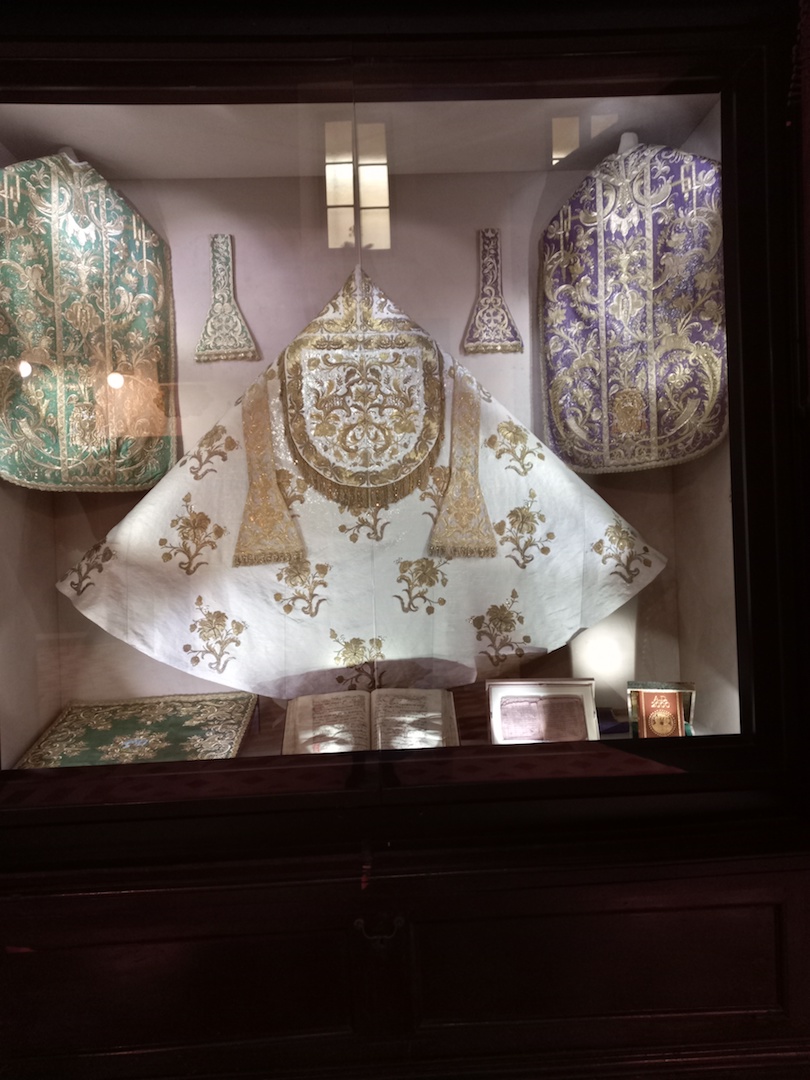
 Liturgical garments (including a cope) from the upstairs wardrobe in the Basilica di Santa Maria Maggiore, Rome.(Gillian Vogelsang, 29 December) Willem and I have just got back from a few days in Rome, a trip to get away from the cold and rain of the Netherlands, to follow the ‘red thread’ of seeing textiles and dress, and to work on the Bloomsbury Encyclopedia of Embroidery.
We went to Rome mainly with the intention of seeing the embroidered liturgical garments in the Basilica di Santa Maria Maggiore. The various garments we wanted to see are in a locked off area and you need to go with a guide (it is well worth doing the guided tour in order also to see the medieval mosaics on the [former] outside of the front facade).
The embroidered vestments are displayed in two giant wardrobes in a room upstairs in the basilica as well as in the museum in the crypt area. Most of the pieces are 18th century and later in date, but present a variety of silk and metal thread techniques that I found really interesting to see.
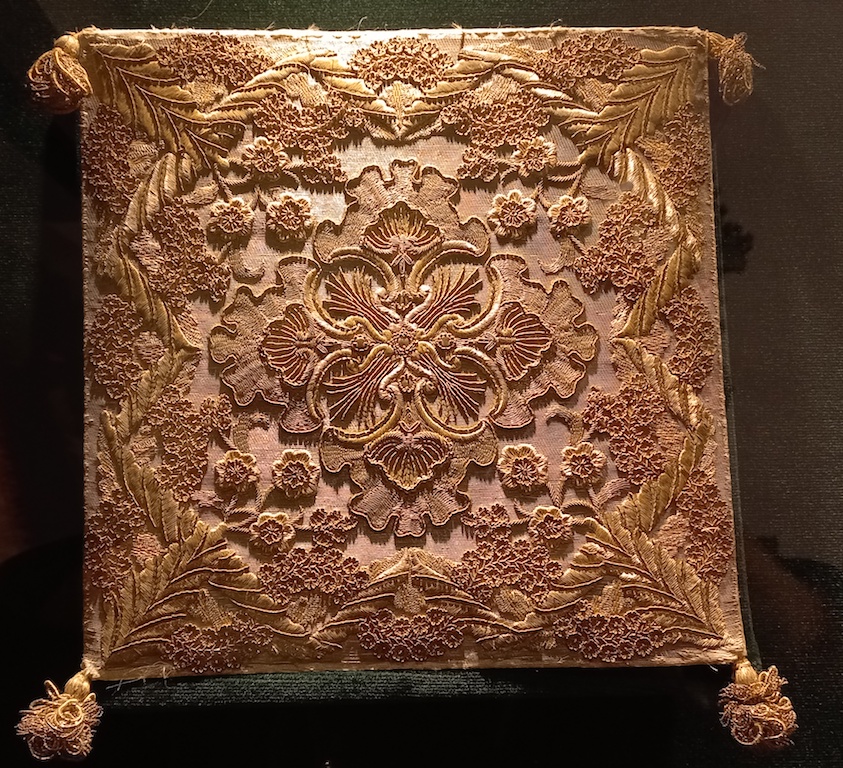 Gold and silver embroidered cloth, early 18th century. From the museum of the Basilica di Santa Maria Maggiore, Rome.
I was also, and here I am hesitant to say anything about this, looking at the mosaic floor in the main nave of the basilica and thinking that these would make fantastic quilt tops (patchwork/pieced). Some of them are simple patterns and made from large blocks of marble, others are really complicated with small, repeating geometric designs. The TRC can have a profound effect on how you see the world!
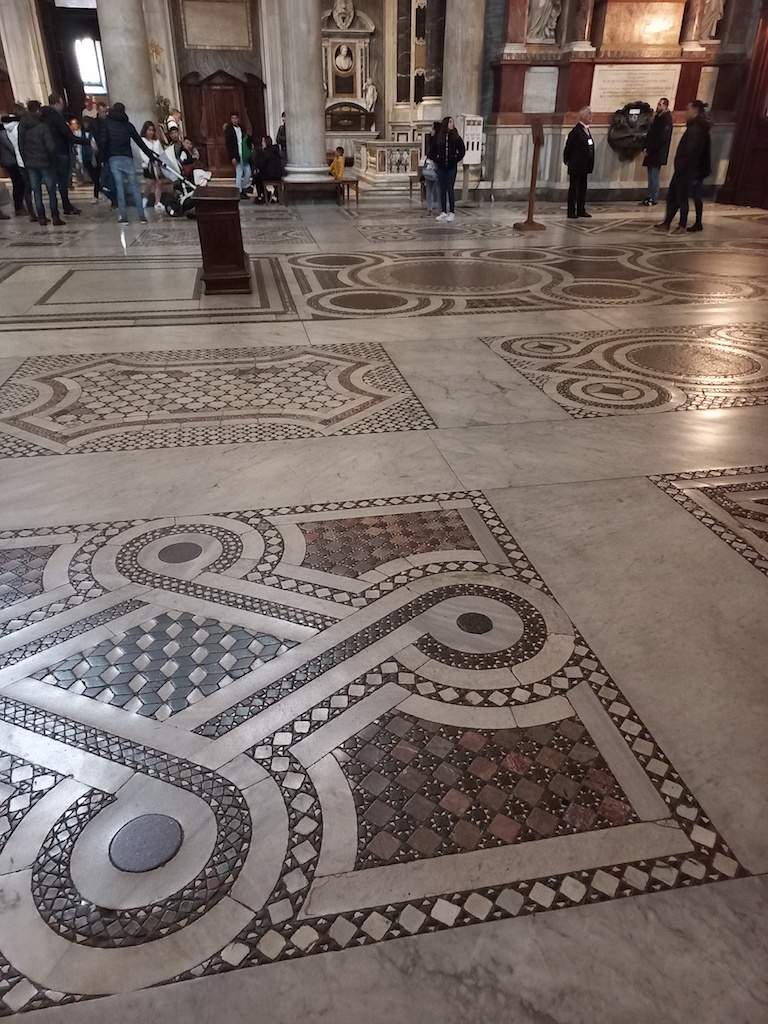 Mosaic floor of the nave of the Basilica di Maria Maggiore, Rome.And then onto the Museo de Roma, along the Piazza Navona, which we had understood has a collection of 18th century and later urban garments – again I was hunting embroidery. Well, there are lots of paintings, wall and ceiling frescoes and sculptures (all of varying degrees of quality, have a good look at the Ancient Egyptian ceiling of one of the rooms for an example of ‘Egyptomania’ painted by someone with minimal knowledge of ancient Egyptian art).
But no textiles or garments were on display except for a valence decorating a coach in the courtyard. I may add that another place in Rome, with disappointingly few garments, which we visited some years ago, is the Museo Boncompagni Ludovisi per le Arti Decorative, a museum mostly about furniture and paintings, with the occasional showcase with garments and very little information.
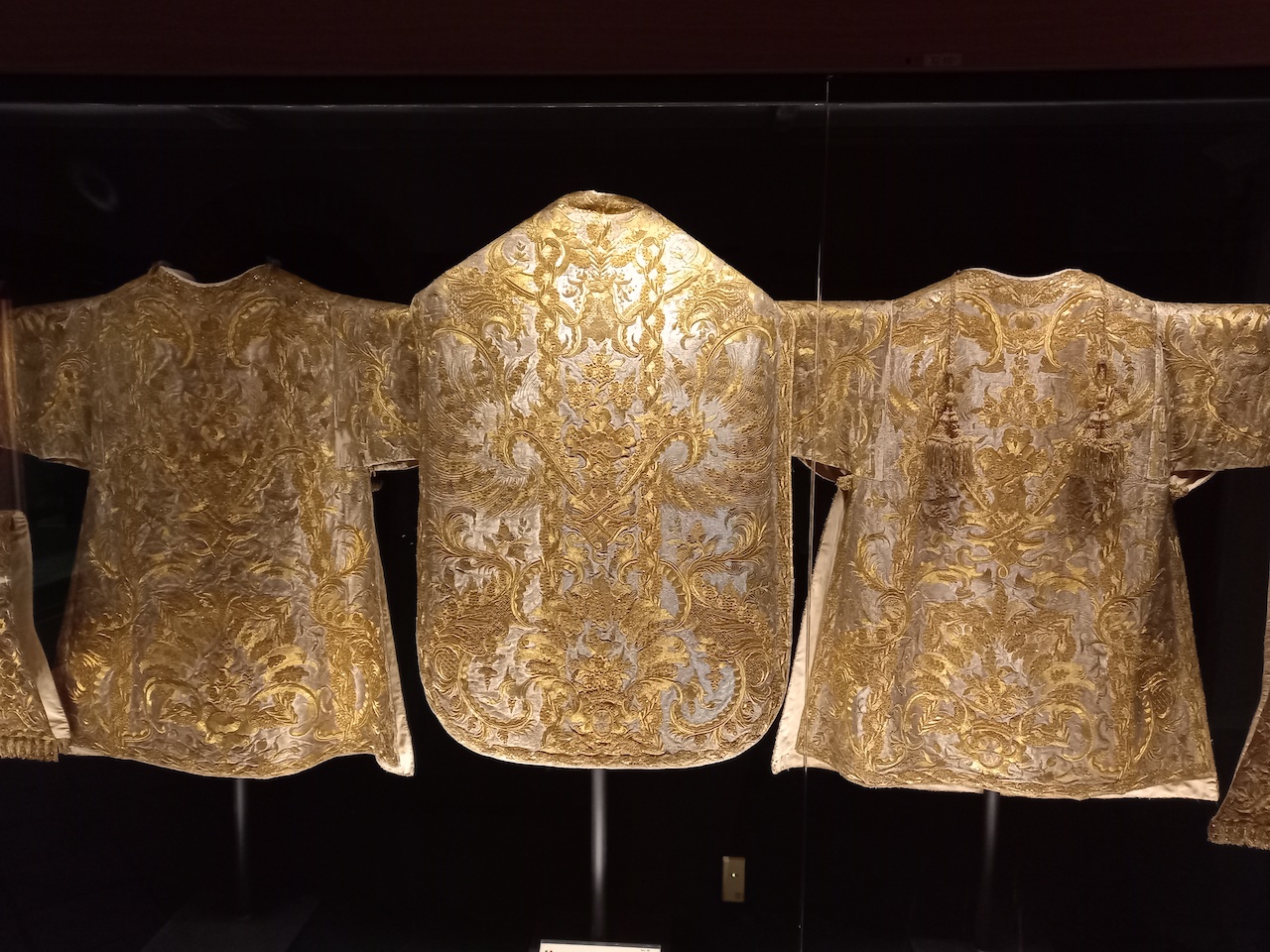 Three gold and silver embroidered, 18th century chasubles from the museum of the Basilica di Santa Maria Maggiore, Rome.
We also went to the Basilica of St. Paul Outside the Walls, a giant and once upon a time very important religious building in which the body of St. Paul, one of the Apostles who was beheaded in 64/65 AD is said to be buried. Again considering how important textiles and dress are to such religious institutes for hundreds of years, surprisingly few items were displayed. Basically the only item we could find was a relatively modern altar frontal!
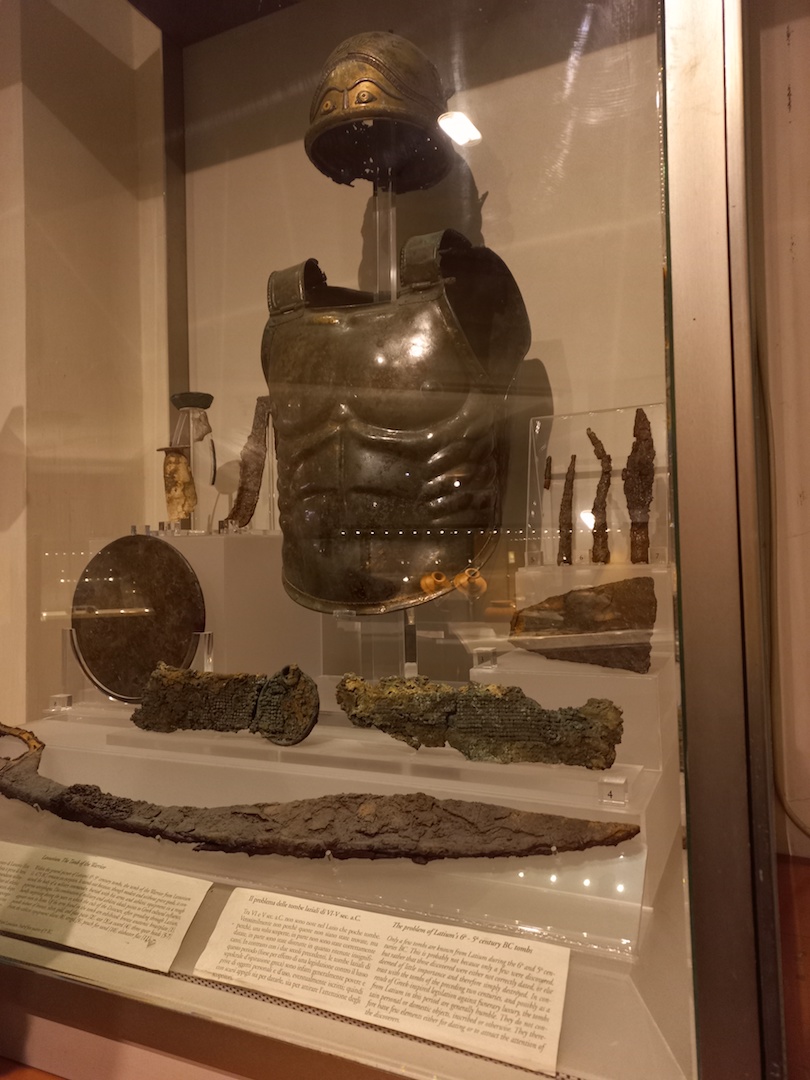 Harness, helmet, a beaded belt and weaponry from a burial southeast of Rome, 5th century BC.And finally, just before we set off to the airport, we went to the Thermae of Diocletianus, which dates to the early 4th century AD, and is a vast complex that was a public bathhouse, meeting place, etc., and at its peak covered 32 acres, a place well worth visiting in order to get an idea of the grandeur that was Ancient Rome. There is also an attached epigraphy museum with detailed descriptions of what is writing, how it was done in Ancient Rome and who actually was responsible for writing and looking after the written word (originally there were several libraries in the complex, so it is understandable that an epigraphy museum is located there).
The only actual dress related objects in the whole complex appears to be a set of armour and a sword from a 5th century BC burial from ancient Lanuvium, southeast of Rome. The warrior’s belt is covered in rows of metal beads – very interesting. More striking in the thermae was the vast number of sculptures of imperial period men and women in various types of attire, yet although clothing was very important to define a person’s social and economic position in Ancient Rome, there was no information about this vital aspect of Roman life. What a missed opportunity, to have these fantastic and original depictions of garments and how they were worn and simply do nothing with them!
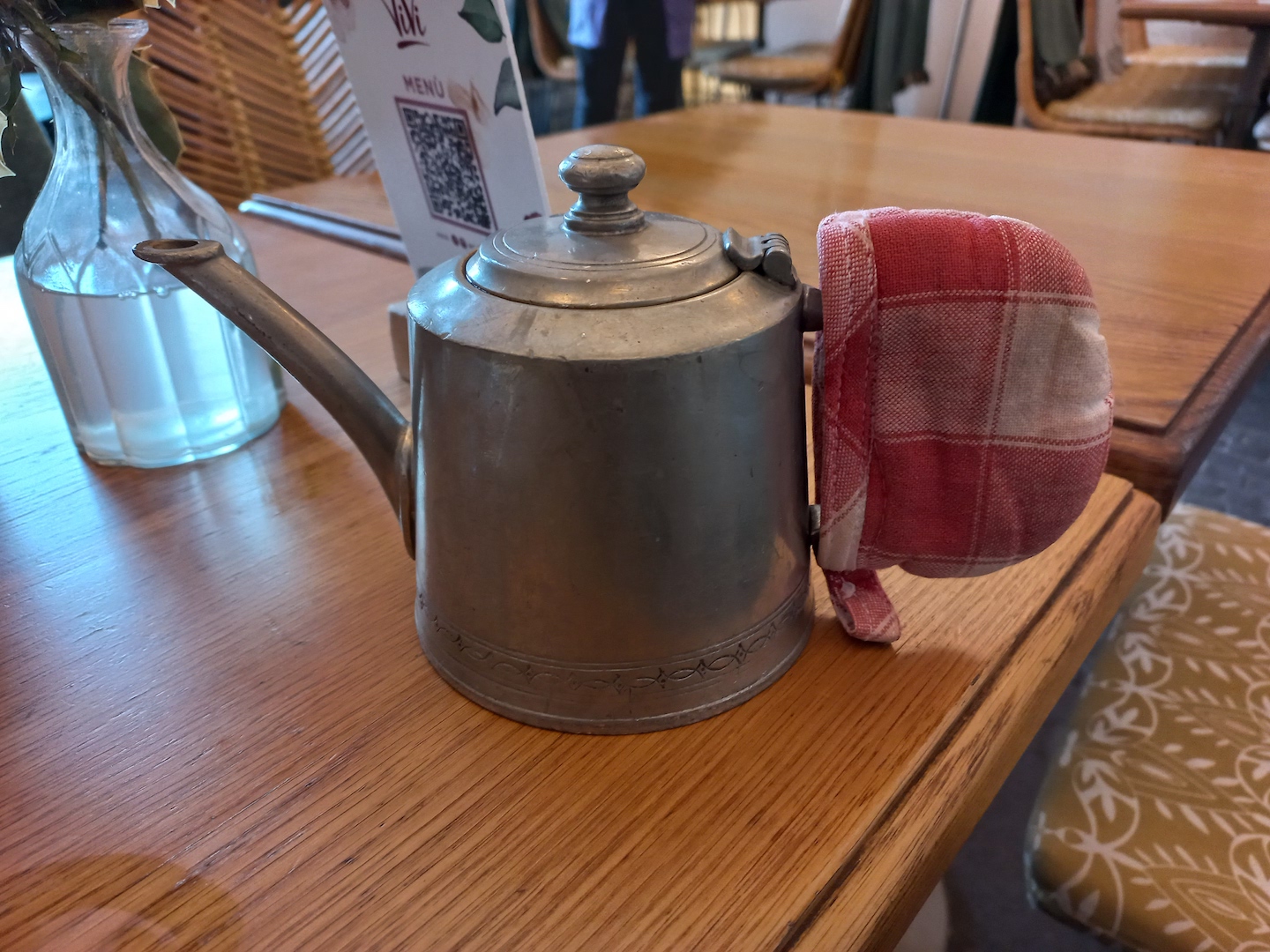 Perhaps we should not complain too much: we did find textiles in Rome. A padded cloth serving as a teapot holder in a Roman cafe.All of which got me thinking about the underestimated role of textiles and clothing in the (Western) museum world and this over dependence on art historical principles that is so firmly based on an Italian Renaissance period hierarchy consisting of paintings, sculpture, architecture, and the rest (high art versus ‘low’ art).
This is a theme I mutter about on a regular basis, but until more museums can move away from the dominant role of paintings and other forms of Art, the rest of our diverse cultural heritage will go under-appreciated and ignored by those holding the purse strings! Surely not a ‘good thing’ in the age of sustainability! What we need is more information and inspiration in order to take textiles and dress into the next phase of the appreciation and enjoyment of this important and diverse form of shared cultural history!
Gillian Vogelsang-Eastwood, 29 December 2022


